When people hear that I’ve spent nearly 25 years at Airbus, they assume I took a “traditional” path into aerospace — one that started with college and a four-year degree.
But I didn’t. And I want today’s high school graduates to know that they have options, because there’s no singular path to a successful and meaningful career.
When I graduated from high school, I faced a crossroads. It was longer ago than I’d like to admit, but my experience still rings true today. When you don’t know what you don’t know, how do you even begin to answer the age-old question: “What’s next?”
I had the opportunity to attend university and considered that path carefully, but I was drawn to the idea of an apprenticeship because it offered something different: the chance to learn by doing. Unlike a traditional university path, an apprenticeship combines classroom instruction with hands-on experience in the workplace. You continue learning, but instead of spending all your time in a lecture hall, you’re applying those lessons in a real-world setting alongside experienced professionals.
Rather than spending four years preparing for a career, I could start building one immediately while continuing my education. Growing up in Broughton, Wales, Airbus was already a familiar presence in the community, and its apprenticeship program offered a chance to be part of something much bigger than myself. It wasn’t simply a job; it was an opportunity to gain skills, earn qualifications, build relationships and begin a long-term career all at the same time.
To my mother’s chagrin, the answer for me wasn’t university, but rather an apprenticeship. Straight into the workforce, where I could learn on the job and earn a living while gaining real world experience.
I was 18, still living at home in Broughton. I climbed behind the wheel of my first car, setting out for my first day at Airbus. It was raining hard, and one of my windshield wipers stopped working halfway there. I spent the whole drive panicking, convinced I was going to be late. What felt like a disaster at the time is now just a good story. Because what I didn’t realize was that the opportunity waiting for me that morning would shape the rest of my life.
As expected, the apprenticeship taught me technical skills like how to build aircraft, understand manufacturing processes and solve complex engineering challenges. But it was the unexpected lessons that opened doors I never imagined were possible: working with people, adapting to new situations, solving problems and learning to see challenges from different perspectives.
Over three years, I gained hands-on experience across different parts of the business and developed a foundation that has shaped every opportunity since. Even now, I regularly draw on lessons I learned during that time. The apprenticeship didn’t just prepare me for my first job; it prepared me for an entire career.
After about eight years, I left Broughton for Airbus’ facility in Hamburg, Germany, where I continued to apply learnings from my apprenticeship to further advance my career in the organization. In 2015, I moved to Mobile to help establish our first commercial aircraft manufacturing site in the United States — a life-changing opportunity I couldn’t possibly have foreseen during that dreadful, rainy morning commute. That’s why workforce development matters so much to me: it opens doors you may not even know exist.
Most high schoolers encounter the same question repeatedly from parents, teachers, mentors and friends: “Where are you going to college?” I think that’s the wrong question, because it assumes college is the next step for everyone and stigmatizes other choices. College is the right path for a lot of individuals across a variety of careers, but it’s not the only path nor the best one for everyone. Instead, we should be asking, “What environment will help this person learn, grow and succeed?”
There are plenty of brilliant and talented people who learn best by doing. I encounter them every day working on the final assembly line as Airbus apprentices. Not to mention the financial barriers, family obligations or other circumstances that can make a traditional university track difficult. It’s not a lack of potential or promise, but a different way into the workforce.
In Mobile, Flight Works Alabama provides a direct line into Airbus through FlightPath9 (FP9), a workforce development program that introduces students to careers in aerospace and advanced manufacturing while creating a pathway into Airbus apprenticeship opportunities. Every time I meet a new group of FP9 participants, I recognize something familiar — students and young adults who are curious and capable but uncertain about how to channel that into a career.
They don’t need a brochure. What they need is exposure. They need to see what these careers actually look like, to talk to people doing them, and to connect what they’re learning in school to something real. When a student can walk through an advanced manufacturing facility and picture themselves there, what once seemed out of reach starts to look like an option. That’s why Flight Works Alabama matters. Its greatest value isn’t just teaching students about aerospace. It’s showing them what’s possible.
Many young people have never stepped inside a manufacturing facility or met someone working in these industries. They may not realize that world-class career opportunities exist right here in Mobile. Whether they ultimately choose to build airplanes, ships, machinery or pursue a completely different path, exposure matters. I know that because my own career began when someone helped me see an opportunity I didn’t know existed. Flight Works Alabama does the same thing for Alabama students every day, helping them connect their interests and talents to real careers and giving them the confidence to imagine a future they may not have considered before.
The stakes go beyond any one student. Mobile‘s long-term growth depends on a skilled workforce, and building that pipeline doesn’t happen overnight. It requires sustained investment in career-connected learning, and it requires reaching young people before they’ve already made their decisions about what’s available to them.
I had no idea my apprenticeship would lead me to Hamburg, let alone across the ocean to Alabama. I had no idea that, even without a college degree, I could become Vice President and Head of A320 in Mobile. I didn’t have a roadmap at 18, but I had something even better: the opportunity to chart my own course, shaped by the people who believed in me along the way.
Flight Works Alabama and programs like FlightPath9 present an opportunity for the next generation of Alabama students. Not everyone who visits us at Brookley or becomes an apprentice will have a lifelong career in aviation manufacturing, but they will certainly discover an interest they didn’t know they had, or a career path they’d never considered, or simply the confidence that comes from seeing the future at your fingertips.
That’s what an opportunity does. And it’s worth investing in.
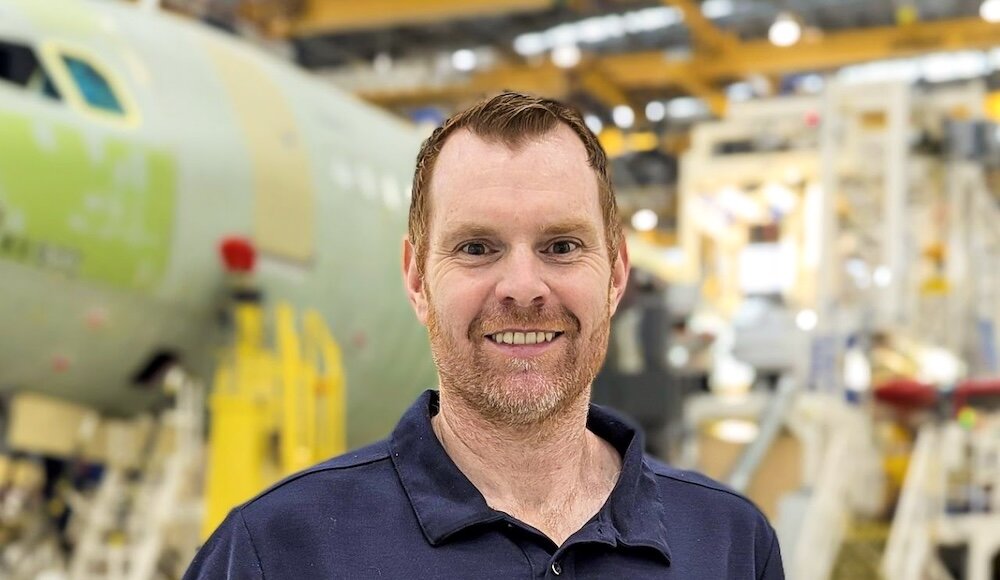
Nathan England is vice president and head of the A320 Program at Airbus in Mobile.