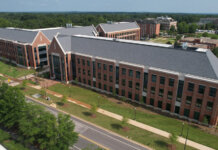
The University of Alabama in Huntsville (UAH) always has had a close relationship with nearby Redstone Arsenal. Many of the university’s offerings have been developed in response to the specific workforce needs of the U.S. Army community at Redstone. The Rotorcraft Systems Engineering and Simulation Center (RSESC) is one of those offerings.
The idea for the rotorcraft center at UAH “grew directly out of the needs of the Army aviation community located at Redstone Arsenal,” says Jerry Hendrix, executive director of the RSESC. Established in 2003, the center not only provides education but also conducts research and partners with industry across the spectrum of aerospace and defense.
Evolving beyond traditional helicopter and rotary-wing engineering, the center’s research also includes vertical lift, uncrewed aircraft systems, autonomous aerospace, systems engineering, digital engineering, integration and testing, and space-related hardware.
Contributing to the Community
The RSESC plays an important role in connecting education, research, and the Huntsville aerospace and defense workforce. “Students aren’t simply learning engineering concepts in a classroom,” Hendrix says. “They can work alongside professional engineers and researchers on real government and industry problems.”
The center’s uSOURCE program specifically connects students with employers for part-time engineering work and workforce development. Because UAH is located next to Redstone Arsenal and within one of the nation’s largest aerospace and defense clusters, those connections are valuable for both students and employers.
“The center helps produce engineers who already have experience with systems engineering, autonomous vehicles, prototyping, testing and other skills sought by the region’s employers,” Hendrix says.
Typically, the rotorcraft center supports about 70 students, who may be placed at corporations ranging from Boeing to COLSA. More than 500 students have graduated from the program with experience at Boeing, in particular.
In addition to work experience, the RSESC also provides U.S. students with the opportunity to earn security clearance, a valuable credential for the job search. “Those clearances will follow the student’s entire career and help enable their future,” Hendrix says.
Undertaking Valuable Research
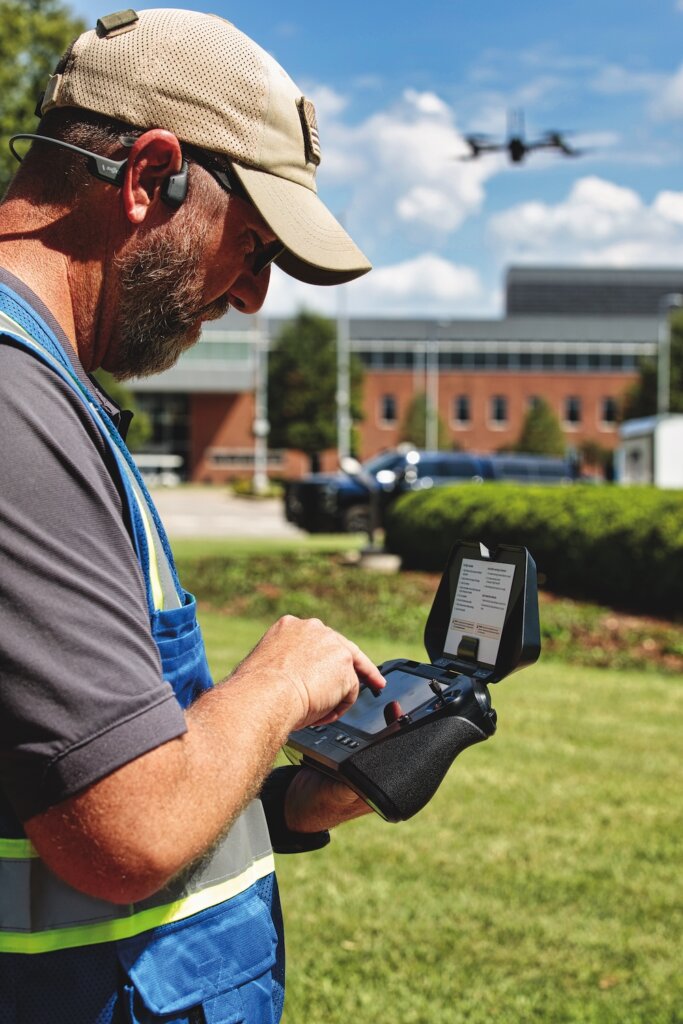
The research that takes place at UAH’s rotorcraft center is vital for the students learning there as well as the nation’s current defense and aerospace needs, Hendrix says. Some of the center’s current capabilities include:
- Uncrewed aircraft systems (UAS) and swarm autonomy
- Counter-UAS technologies
- Vertical-lift aircraft, including crewed/uncrewed teaming
- Autonomous aerospace systems
- Model-based systems engineering and digital engineering
- Modeling and simulation
- Systems integration, interoperability and testing
- Mechanical design and engineering analysis
- Rapid prototyping and advanced technology integration
The applications of this research are broad, spanning several federal agencies. For example, the center’s research has supported Army aviation and UAS programs, Federal Aviation Administration (FAA) research on integrating drones into the national airspace and performing drone disaster search and rescue, NASA-related space hardware, and even environmental research involving unmanned aircraft for water-resource and flood forecasting applications.
The center’s work closely connects to several major national priorities, including autonomy, counter-drone capabilities, advanced vertical lift, contested logistics, navigation, interoperability and rapid development of new aerospace systems. That connection to national priorities “is becoming even more direct,” Hendrix says. “RSESC’s current mission specifically identifies UAS, counter-UAS and autonomous systems, and the center works with the Department of War on robotic threats and counter-autonomous solutions.”
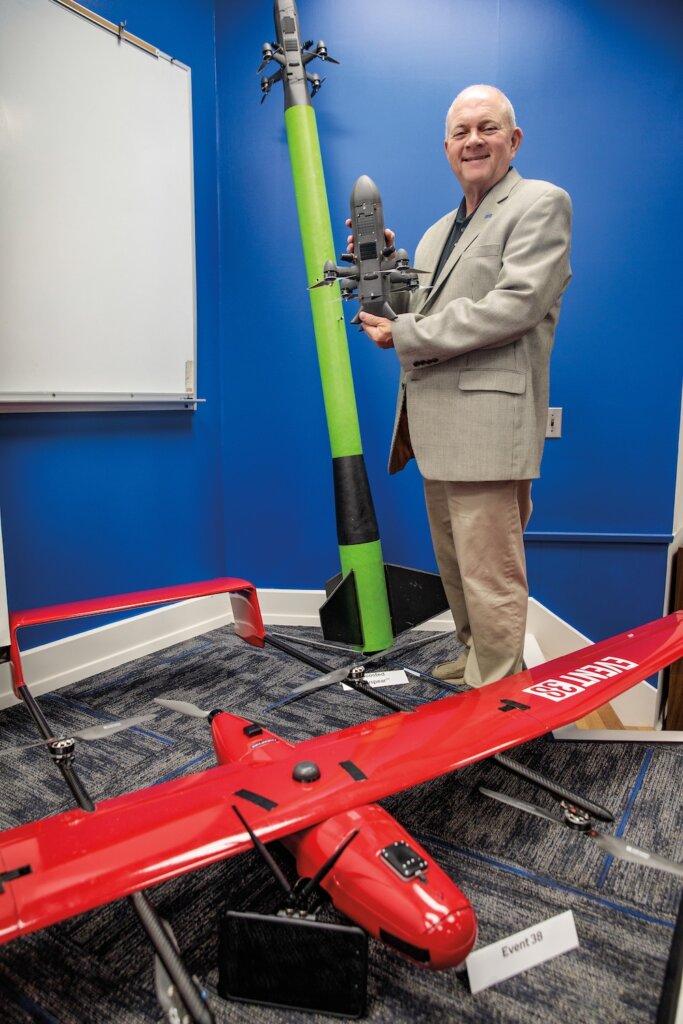
Recently, RSESC staff and students developed Skyspear, an autonomous aerial defense platform for counter-UAS applications. The team demonstrated the platform at three Department of War technology experimentation events and at three Special Operations events. The Skyspear project is aimed at providing counter-UAS interceptor capabilities for modern warfighters at a much lower cost, Hendrix says.
“RSESC sits at an important intersection,” he says. “It can help the government and industry solve today’s aerospace and defense problems while simultaneously training the engineers who will be needed to solve the next generation of those problems.”
Partnering With Industry
Through its uSOURCE program, the rotorcraft center works directly with local employers like Boeing, COLSA and MTSI to provide students with real-world engineering experience. But that isn’t the only way the center partners with industry players.
For example, RSESC recently announced an agreement with ASKA, an Urban Air Mobility solution for mass cargo and personnel carriers, to explore collaborative research and development. Together, UAH and ASKA will examine advanced hybrid-electric, autonomous drive-and-fly VTOL aircraft.
The potential research areas identified in the partnership agreement include:
- Battery systems
- Electric motors
- Simulation environments
- Safety systems
- Autonomous flight-control technologies
The partnership with ASKA “also provides a framework for pursuing U.S. defense-related opportunities and international programs,” Hendrix says. “One example is an ASKA project in Singapore that could provide a real-world test environment for medical evacuation and distributed logistics in an Indo-Pacific-style operating environment.”
The relationship isn’t just about technology development, Hendrix says. It also includes an educational component, aiming to expose UAH students to emerging advanced-air-mobility technologies and the engineering challenges associated with making autonomous VTOL aircraft safe and practical.
The ASKA agreement is just the latest in a long history of working with government, industry and commercial partners. The RSESC has worked with organizations such as NASA, the U.S. Army, the FAA and Huntsville International Airport, as well as industry partners.
“The center’s philosophy is essentially that UAH can serve as a bridge between government, industry and students,” Hendrix says. “Rather than trying to replace private companies or government laboratories, RSESC brings those groups together, contributes engineering and research expertise and gives students an opportunity to become part of the workforce while they’re still in school.”
UAH’s rotorcraft center got its start because Huntsville’s Army aviation community needed a university partner capable of solving real engineering problems, Hendrix says. And more than two decades later, the center has grown into a broader autonomous-aerospace and systems-engineering center that serves government and industry while giving UAH students unusually direct experience with the technologies shaping the future of defense and aviation.
Nancy Mann Jackson and Dennis Keim are freelance contributors to Business Alabama. Both are based in Huntsville.
This article appears in the October 2026 issue of Business Alabama.