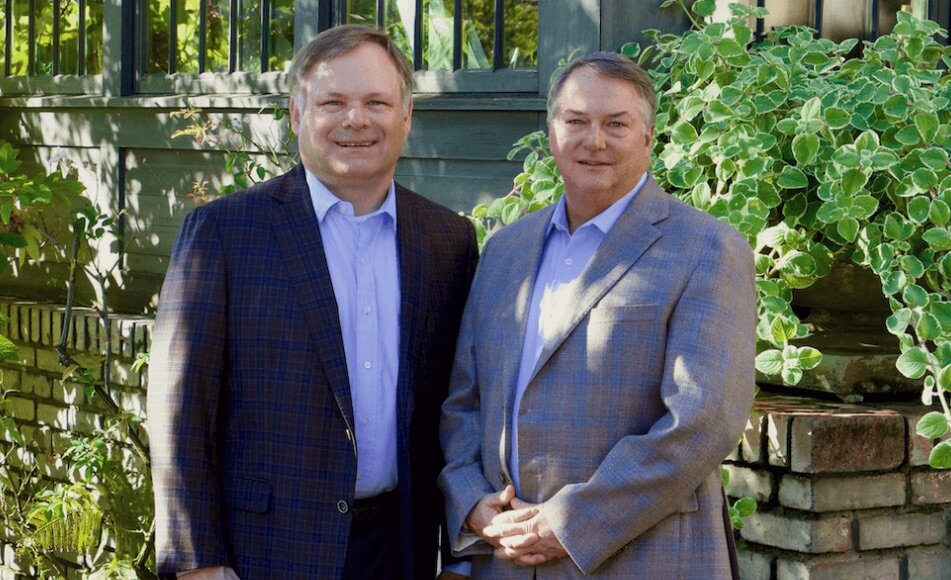
When West Harris and Norman Tynes combined their real estate experience in 2005 to form the Birmingham-based Harris Tynes Realty Group, one of their most important early decisions wasn’t anything they did. Rather, it was what they did not do.
Namely, the duo didn’t run out and try to make a quick splash by using borrowed money to buy a bunch of expensive, well-known properties. Instead, as Tynes says, “We just kept our head down, leased and managed properties for our clients, and didn’t make any big purchasing mistakes.”
That proved to be crucial three years later when the real estate market collapsed in 2008, resulting in a major economic downturn. Commercial property values dropped by more than 40% nationwide, and numerous real estate companies went out of business.
But not the fledgling Harris Tynes Realty Group. In fact, Tynes says, when he and Harris met with their accounting advisers at Warren Averett for a year-end review, they were greeted with actual applause.
“I asked them why they were applauding,” Tynes recalls. “They said, ‘You have just survived the biggest economic downturn we’ve seen better than any of your peer groups.’ It didn’t feel like it at times. But we were able to navigate through that and help our clients do the same.”
That was the beginning of what is now a two-decade (and counting) ride for Harris and Tynes through a variety of challenges and changes. The biggest change was the company becoming part of Harbert Realty Services in 2013, then reverting to independent status this past August by acquiring HRS from Harbert Management Corp. and renaming the company Harris Tynes Commercial Real Estate.
“We are so thankful to Harbert for the opportunity they gave us. They were great to deal with,” Harris says. “But this was just an opportunity for us to lead the company outright again. We have all the same tools that we’ve had and most of the same people. Now we’re positioned to recruit talent and build on this foundation.”
Or as Tynes puts it, “This is a full-circle moment for us.”
The circle began back when Harris and Tynes both were in leadership positions at the Birmingham chapter of what is now known as the Commercial Real Estate Development Association (CREDA). Tynes had just left Daniel Corp. to start his own business, and Harris was in a situation where his role in Birmingham with Taylor & Mathis was being eliminated and he would have to move to Atlanta to remain with the company.
So, during a legislative retreat in Washington, D.C., the two carved out time for a quick half-hour meeting to discuss their future plans.
“I knew West was going through a change, and I was growing a business and needed some bandwidth,” Tynes says. “I said, ‘We need to join forces. You’re changing, I’m growing. I already have the platform.’ So, we cut a deal. It was a handshake with little money involved.”
The agreement worked well enough that once the real estate market emerged from the Great Recession of 2008-09, Harris Tynes grew into a significant player in the Birmingham region. So much so that by 2013, the company was ready to make a major expansion. That is when Harbert Realty Services became involved.
“Norman and I were about to invest a lot of money in people and infrastructure and back-office accounting,” Harris says. “Harbert Realty already had all those things. They needed more talent and business in management, and we were able to provide that. It was a successful venture.”
Along the way, the company was able to weather another major storm not of its making, when the Covid pandemic of 2020 decimated the office real estate market. According to a study by Cushman & Wakefield, the national office vacancy rate reached nearly 20% by 2023. Yet under the leadership of Harris and Tynes, HRS continued to thrive.
“Our business actually grew (during COVID-19) because people needed our help to navigate the change in the real estate landscape at the time,” Tynes says. “We picked up a number of clients just because of our expertise in that space.”
Once 2026 rolled around, Harris and Tynes had spent more time as part of Harbert (13 years) than they had on their own (eight years). But situations change, and Harris says, “This business did not necessarily fit the strategy of Harbert Corp. anymore.” So, the decision was made for Harris and Tynes to acquire Harbert Realty.
Their new company is significantly larger than it was in 2013. The new Harris Tynes Commercial Real Estate has approximately 70 employees, and Harris says they would like that number to increase “to 80 and maybe 90” in the coming years. The company also has expanded well beyond its Birmingham base.
“We’ve become a large regional player,” Harris says. “Our motto is, we’ll conduct business wherever there is an SEC football game. That’s our footprint.”
There definitely appears to be plenty of business available, as commercial real estate opportunities continue to expand in the years following the Covid downturn.
“This market is active,” Harris says. “The investors who have been sitting on the sideline have gotten into the game because they just can’t wait anymore. There’s a pent-up demand from an investment standpoint. People have a significant amount of capital that they’re trying to deploy, and they want to go find good deals.”
Tynes agrees. “There is a lot of opportunity in the market today,” he says. “Valuations are bouncing around pretty significantly. As the debt that was placed pre-Covid starts maturing, it’s creating some real opportunity on the buy side.
“While the office sector has demonstrated negative growth — we still have more square footage coming onto the market than is being absorbed — there is leasing activity and transactions taking place. I’m involved in more expansion transactions today than I have been in a long time, because existing businesses are growing.”
Wherever the commercial real estate market goes from here, one thing seems certain. After more than two decades together, West Harris and Norman Tynes plan to continue their partnership for years to come.
“We’ve become very close friends through all this,” Harris says. “We’ve had amazing opportunities and amazing success. We’ve had our handful of challenges, like anybody. But the future is really bright, and we couldn’t be more excited about where we are today. It’s been a great path together.”
Cary Estes and Will Dickey are Birmingham-based freelance contributors to Business Alabama.
This article appears in the November 2026 issue of Business Alabama.