Community colleges, by definition, serve the communities where they are located. One of the effective ways they do it in Alabama is through programs that offer lots of hands-on training to prepare students for specific jobs in their areas that need workers.
To get their feet in the door, so to speak, basic skills and practical knowledge will give them a leg up on other applicants. Judging from their extremely high placement rates, some of the workforce training programs are doing quite a commendable job of preparing students for important industries across the state. We’ll take a close look at three programs — forestry, marine technology and the culinary arts — in which students develop real-world experience rather than relying solely on books, lectures and online resources.
FORESTRY AND WILDLIFE SCIENCES
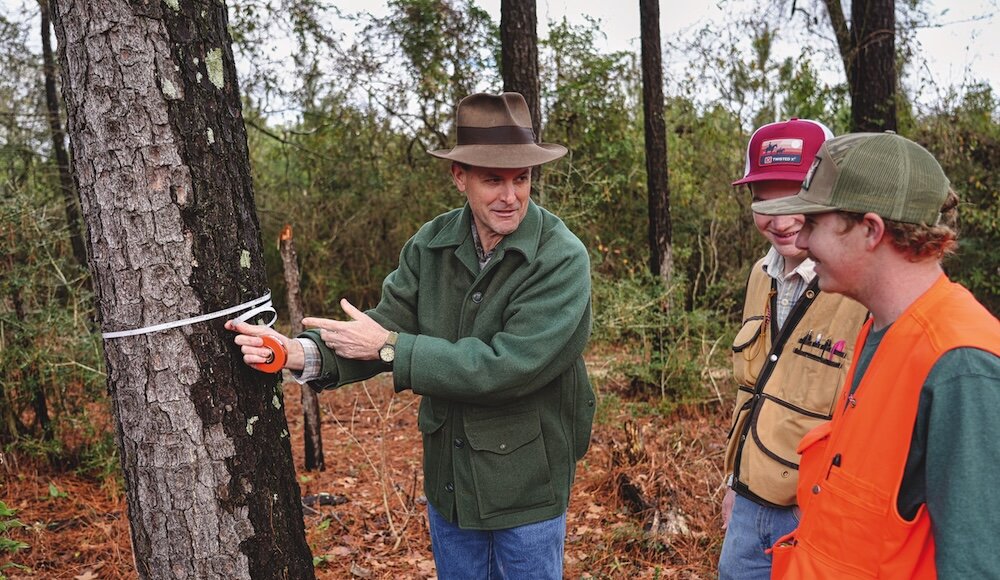
Lurleen B. Wallace Community College in Andalusia offers the system’s only forestry program, and there’s a certain kind of person that’s drawn to it. Their instructor, Russell Stringer, could easily be describing himself when he relates their traits. “It’s people who could not stand to work in a cubicle or an office building 40 hours a week, day in and day out,” he says. “They would claw the walls down if you tried to shut them inside all day.”

Having grown up in the same forest-rich area, he’s been around trees all of his life and was intrigued by them enough to make them a career. He came to teaching less than three years ago after 30 years in the industry, including many years as the urban forester for the city of Montgomery. “It’s time for the younger folks to take over,” he says, “and I thought it might be a good idea to teach them what I know.”
The students who are following in his footsteps are on a path toward associate’s degrees to become forest technicians. Over five semesters they learn about growing and managing trees and identifying, measuring and evaluating timber. They also work with heavy equipment and earn certification in prescribed burns, logging and firefighting. Many focus on a growing sector of the industry, which is managing properties to attract certain wildlife to make hunting more productive.
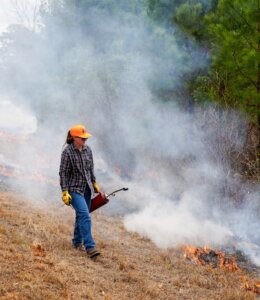
The students spend about half their time in the classrooms before heading outside, where they feel more comfortable. “There is a national forest within 15 minutes of us, there’s a state park within 10 minutes of us, there’s the Solon Dixon Forestry Education Center within 20 minutes of us,” Stringer says, “and there are innumerable landowners who support the program and allow access for educational purposes.”
Advisory committees at LBW Community College help to guide the curricula for technical programs such as this one, and Stringer notes that some of the industry professionals involved are also the ones who are regularly looking for employees.
He has a dependable measure of the program’s success: “I go by how many times my phone rings and it’s somebody in the forestry industry asking, ‘Do you have anybody good that’s about to graduate?’ I’ve got more people calling me than I’ve got students,” Stringer says. “A student that’s willing to work can go to work in just a couple of weeks somewhere doing something forestry related. And really and truly,” he adds, “a student that’s in the forestry program is not afraid to work. Most of them, by the time they graduate, have interned somewhere, and the companies they’ve interned with are just waiting for them to graduate so they can put them on full time.”
MARINE TECHNOLOGY
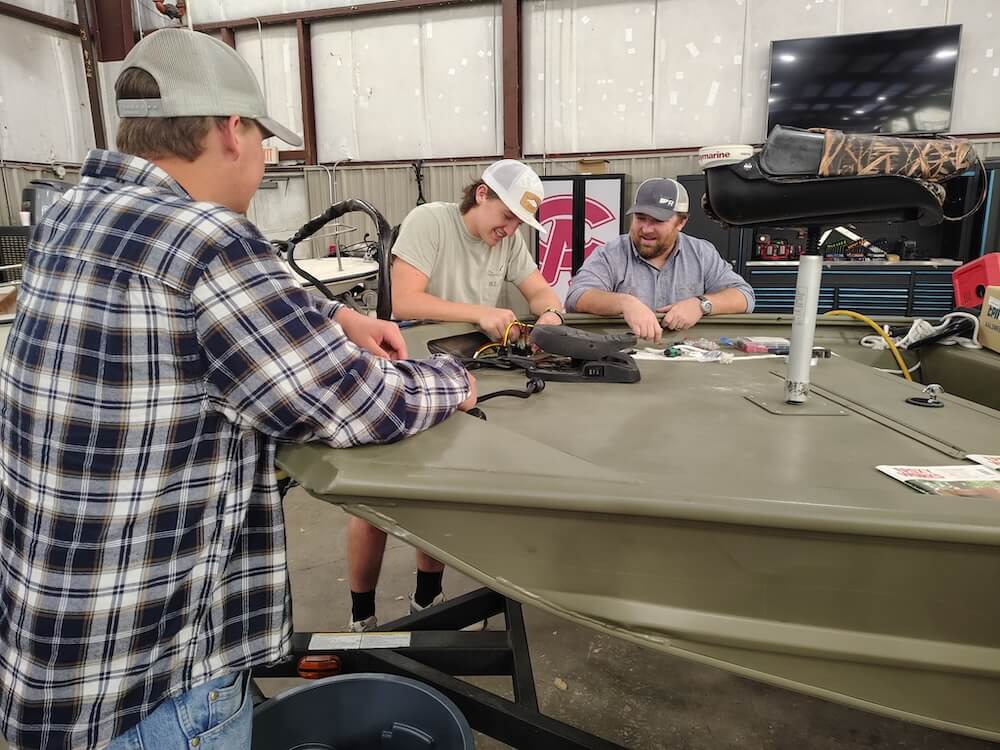
The closer you get to the Gulf waters, the more boats you’ll see, and someone has to keep them running. Many of these marine technicians are learning the ropes at Coastal Alabama Community College, which operates out of 12 locations in Alabama’s southernmost counties.
Rather than a two-year degree, students earn a short-term certificate by attending classes that are held in a warehouse-style building in Foley that’s owned by Baldwin County Public Schools. Inside is a small classroom and a nicely equipped shop that contains the numerous boats, motors and accessories they use for training.
Most of the students, but not all, are juniors and seniors at area high schools who attend under the Alabama Community College System’s dual enrollment provisions. “We knew when we started the program in 2002 that there were probably a limited number of adults who were looking to do this in a change-of-career scenario,” says Josh Duplantis, Coastal Alabama’s dean of workforce and economic development. “We kind of grow our own with this program, and they earn college credits for these courses while they’re still in high school.”
Grants helped to launch the course, and an early assist from Yamaha Motor Company put it in motion. “They really stepped up,” says Duplantis. “They advised us on what equipment we needed to get this thing started and they offered us a curriculum. We have the same arrangement with Mercury, but that came later.”
Instructor William Montgomery is a Birmingham native with a lifetime love of boats. He sees the program as a stepping stone into the same field that lured him from his earlier background in marine biology about 15 years ago.
“It’s an entry-level program, so we’re teaching the basic hands-on theories on how to do maintenance on an outboard — changing oil, water pumps and spark plugs, how to do simple diagnostics,” he says. They also learn to install electronic devices such as GPS units, fishfinders and chartplotters. He stresses to his students the importance of “thinking in a problem-solving way, so that when something isn’t working, they can learn how to troubleshoot it.”
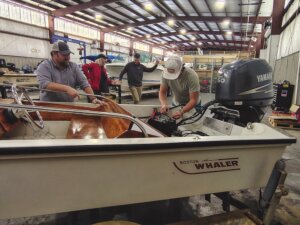
The basic concepts are the same regardless of the size of a vessel, but field trips to supportive businesses such as Grander Marine in Orange Beach, Saunders Yacht Works in Gulf Shores and Sportsman’s Marine in Fairhope help students get a better feel for what they’ll encounter beyond their basic training.
“Boats have gotten exponentially bigger and more complicated,” says Montgomery. “It’s going to be very common for them to be at a marina and have a 35-foot boat with triple engines and cabins and air conditioning and generators and a huge amount of systems and electronics, lithium battery banks and converters, radars and all sorts of other stuff that goes along with having big engines.”
While the need for marine techs is rising along with the population in coastal areas, Duplantis says they don’t want to expand the program too much. “For us, it’s a boutique program,” he says. “We want to meet the market demand by training just enough of them that all of the jobs are filled.”
CULINARY ARTS
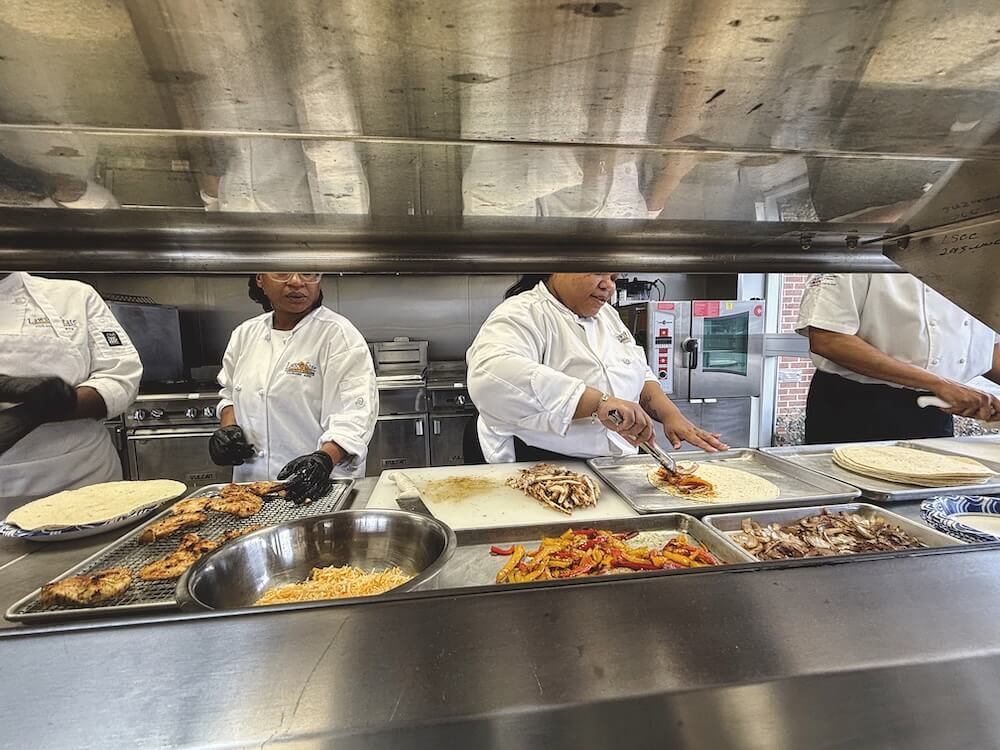
Many cooks would envy the amount of kitchen space and all the tools that culinary students have to work with at Lawson State Community College’s main campus in Birmingham.
The culinary arts program has three separate commercial kitchens, one of them set up specifically for baking and another for prep work. The third one has the equipment they need to cook the big quantities of food they regularly provide for luncheons and other special events in the college’s formal dining room. That’s where guests can taste for themselves what the students have learned under the skilled direction of instructors Adam Elliott and Darvin McDaniel.
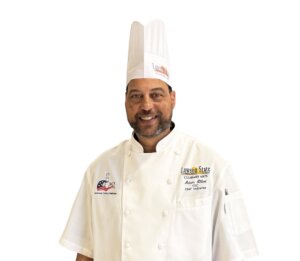
The students, Elliott says, are a mix of young people with a new interest in cooking and others who are more seasoned cooks looking to expand their knowledge, perhaps wanting to move into management. They can learn a lot from Elliott, who is a graduate of the Culinary Institute of America in Hyde Park, New York; worked for years in a variety of restaurants; and operated a successful catering business in Atlanta.
“They leave here and go to hotels, restaurants and catering,” says Elliott. “Some of our students are at Ross Bridge Marriott, which is one of the hotels owned by the Retirement Systems of Alabama, and some are at places such as Applebee’s, Logan’s Roadhouse, O. Henry’s Coffee, Saltgrass Steak House and Waffle House.”
Others have ventured into business for themselves with food trucks, which require additional abilities. “It’s similar to a restaurant but it’s on a smaller scale, and it’s kind of like running your own business,” says Elliott. “So, we do have courses in food purchasing and cost control along with the other culinary courses, and those are very beneficial.”

Along with pro tips on slicing and dicing and expert guidance on topics ranging from menu planning to butchery, students also learn valuable lessons that arguably rank higher than flavors and presentation. “One thing that’s especially important in terms of classroom instruction is food safety and sanitation,” Elliott says. “That includes proper food storage and temperature controls and cross-contamination prevention, which is teaching them about harmful bacteria and contaminants. Then they get their ServSafe certification, which is good for five years.”
While the forestry program and the marine tech program both report 100% job placement rates, Elliott is proud to say that between 75 and 85% of his graduates have been employed at the time of graduation since he started with the program in 2014. “It feels great training our students for the industry,” he says. “They are excited to start a career in food service and contribute their own skills and techniques for the job.”
Jim Hannaford is a Foley-based freelance contributor to Business Alabama.
This article appears in the April 2026 issue of Business Alabama.