One type of breast cancer is very treatable for most people. An Alabama team’s research could supercharge proven drugs to help the rest, potentially saving thousands of lives every year.
An early-stage biologics company called Score Pharma is working to develop immune-oncology therapeutics to treat HER2-positive breast cancer, and possibly non-Hodgkin lymphoma and chronic lymphocytic leukemia as well.
Score’s proprietary patented platform called CoreX helps transform existing antibody therapies into more potent targeted treatments. The process improves the connection between antibody drugs and the body’s own natural cancer-killing cells.
The start-up is only a few years old, but company officials are hoping to begin clinical trials in breast cancer patients in a few years.
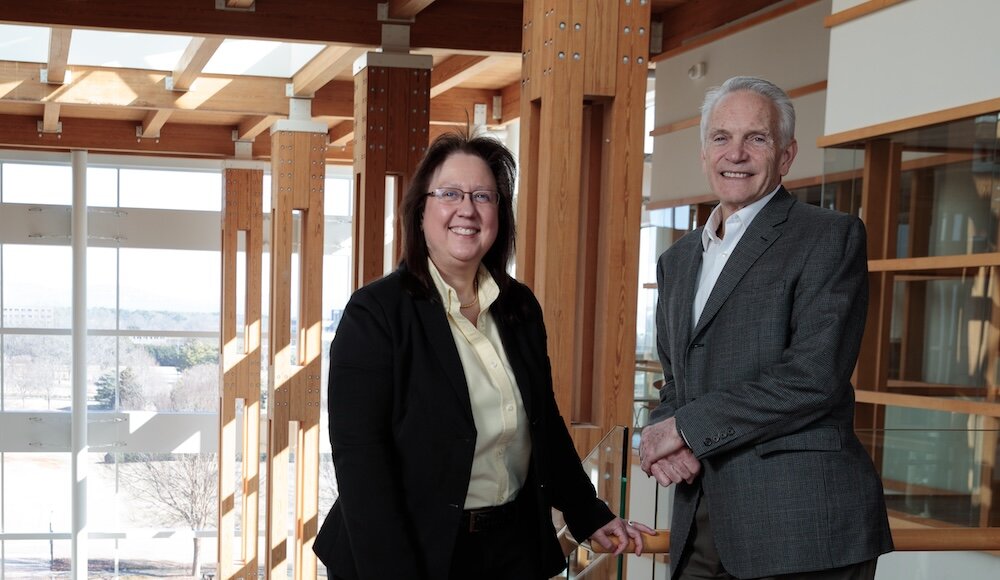
“We couldn’t be happier with the results we’re seeing in our early studies,” says Dr. Jennifer Riggs-Sauthier, chief development officer and vice president of chemistry at Score Pharma. “This advancement brings us one step closer to the clinic — and ultimately, to helping patients benefit from stronger, more effective antibody therapies.”
Dr. Bruce Edward Jones is founder and CEO of the virtual biotech, which is based at the HudsonAlpha Institute for Biotechnology’s Huntsville campus and Southern Research in Birmingham.
When therapeutic antibodies target cancer cells, it triggers an immune response that helps the body’s natural killer cells destroy cancer cells. The hope is that a process called fucose modulation, technically named afucosylation, will make clinically proven treatments more potent. Score is ramping up for scientific confirmation studies at Southern Research.

Jones, a neuroscientist, explains that in the pharmaceutical industry one division focuses on drugs that work via small molecules, such as aspirin, cardiac medications and blood pressure treatments. Another division is the large-molecule group that developed the cancer treatment drug Heparin and other antibody cancer therapies like Rituxan and Herceptin.
Score’s new technology originated as Jones was working for a company focused on small molecule research. When that business acquired a so-called big molecule company, they were expected to integrate.
“We all kind of looked at each other and went, ‘What? We don’t even speak the same language,’” he recalls. What they learned is that scientists working with large molecules that activate the body’s immune system say the challenge is making drugs potent enough.
There was “a very straightforward solution using technology that existed for small molecules,” Jones says. “What was needed is somebody who was very skilled in developing small molecules who knew a lot about large molecules. And that just happened to fit my background.”
Jones invented Score’s proprietary process technology. Afucosylation, removing a piece of the molecule, turned out to be key in making existing treatments better.
“So, if you remove it, these antibody therapeutics that are intended for cancer can become significantly more effective at killing cancer cells — anywhere from five times to a hundred times more effective,” he says.
But isolating and removing the right piece of molecule can take years. If you do it wrong, the treatment will destroy normal tissue, too, and all that research and expense won’t amount to much.
Jones’ complex professional path to Alabama is best summarized by saying that he was chief scientist, head of pharmacology and consultant to various pharmaceutical companies before starting Score in Philadelphia in 2018. He has degrees in biochemistry, pharmacology and toxicology.
Jones worked on recovery of function after neurotrauma for a while, as well as treatments for ALS. Through the years at various companies, he learned a lot about the FDA approval process and entrepreneurship.
His wife’s family ties brought him to Alabama, where he was amazed to see the caliber of ongoing medical and genetic research. He is based in Huntsville but also an entrepreneur in residence at Station 41 Incubator at Southern Research in Birmingham.
“We formed a strategic alliance with Southern Research, which is a non-for-profit, contract research organization,” he says. “They’re large enough to have both the small molecule experience and the large molecule experience under one roof.”
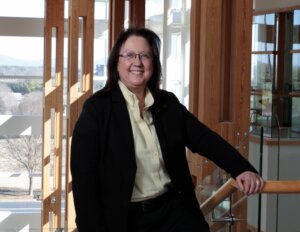
Jones and Riggs-Sauthier direct the lab work in Birmingham.
“I can say that Score Pharma was Philly born, but I’d love to say it’s Alabama raised,” says Jones.
Their first product, now in pre-clinical status, is a “superior, second-generation Herceptin,” Jones says. It’s designed to improve the connection between antibodies and natural cancer-killing cells.
“We don’t change the antibody. It is the same antibody. We just make that connection between the natural killer cell and the antibody stronger by structurally changing the antibody a little bit,” he explains.
While Herceptin works for most people, it is ineffective in many patients with a certain type of breast cancer.
The drug development process incorporates genetic research and artificial intelligence modeling to predict which patients will respond best. Using those results, “We can begin to adapt our technology for a more precision-individualized medicine approach,” he says.
The goal is to get the first IV treatments into patients by 2029.
“The beauty of this is that we already have a drug, Herceptin. It works. It works in about 20% of the patients” with HER2-negative cancer. “What we’re going to do is improve it so that 80% that it doesn’t work for have a better chance of it working.
“We’re talking longer lives,” he says.
Because the company is making structural changes to an approved treatment, the FDA considers Score’s “amped up” process a new product.
HER-2 is one of the most aggressive types of breast cancer but also very treatable in most people. Depending on the type, roughly 20% of the 350,000 or so people treated each year don’t respond well, though.
“We may be safer and more effective for the patient, but it needs to be proven,” Jones says.
Score has several angel investors but is looking for more to support the $50 million to $60 million venture. Jones suspects the company is already on someone’s radar for takeover.
He notes that a pharmaceutical company with multiple proven products is worth an average $4.4 billion acquisition price. Herceptin and its generics alone are worth $9 billion a year. “It’s worth paying $4 billion to get exclusivity for seven years for something that’s going to sell $9 billion,” he observes.
His personal path from Pennsylvania to the Deep South hasn’t been a setback for this entrepreneur — quite the opposite, in fact.
“Since moving here in 2022, I have gotten more traction and more success than I ever expected to get,” Jones says. “Alabama is beginning to recognize that biotech could be a future for them.”
Deborah Storey and Dennis Keim are Huntsville-based freelance contributors to Business Alabama.
This article appears in the March 2026 issue of Business Alabama.