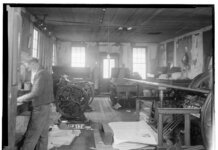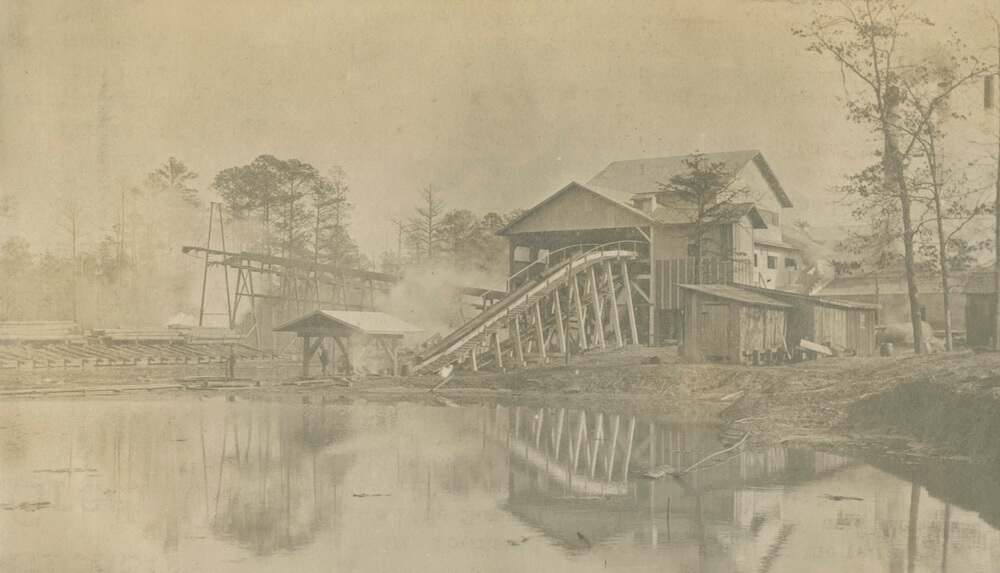
For almost two decades in the early 20th century, a plucky sawmill in rural Walker County employed hundreds of people. Around the mill grew a community that shared its name and featured stores, homes, a hotel, places of worship and recreation.
Chartered in 1906 by brothers Charles and Albert Russell, the Manchester Lumber Co. was located about six miles north of Jasper. The company’s initial purchase of timberland comprised some 26,000 acres and grew to nearly 35,000 over time.
To ensure that the products from their fully integrated mill operation could be quickly transported to customers, the Russells also created a short-line railroad. Chartered the same year with a capital stock of $100,000, the Alabama Central Railroad ran from the lumber company property to Jasper, where it connected with larger lines.
After months of preparation and planning, the Manchester Lumber Co. cut its first logs in October 1907. Just a few weeks later, a fire destroyed two of the company’s drying kilns, and with them some 10,000 feet of lumber.
But with access to a vast swath of timber, and more kilns already in production, it proved a minor setback. A few months later, the lumber company officially incorporated with $20,000 in capital stock. Albert Russell was the general manager.
For the Manchester Lumber Co., supply was never an issue. “Go ahead with your building,” read a self-assured newspaper advertisement offering longleaf yellow pine timbers, joists, floors and siding. “Opportunity knocks but once at your door. Now is the time to build a home so you will have a door for Opportunity to knock at…. GET BUSY.” Another ad promised “perfectly manufactured lumber” of “uniformly good grades.”
A reporter from Jasper’s Daily Mountain Eagle, visiting in September 1909, found the mill working at a capacity of 60,000 board feet of lumber a day and still unable to keep pace with orders. So great was the demand, manager Albert Russell told the reporter, that he had pulled the company’s traveling salesmen from the road.
There were hard times, too. The often-fickle timber market left the company without orders and its 300 employees without work on occasion. Then, in April 1912, a late-night fire burned the mill to the ground. Reports stated that the fire “burned so quickly that nothing could be done to check the flames or save the mill from total destruction.” Losses were an estimated $60,000. From the ashes, workers acted quickly to stand up a temporary mill within days.
A few months later, their rebuild accomplished, the Russell brothers sold the mill and land to a Chicago-based holding company but kept the Alabama Central Railroad out of the deal.
On the ground in Walker County, little changed and the work continued. In the first few months of full operation after the destructive fire, capacity increased to 75,000 board feet per day.
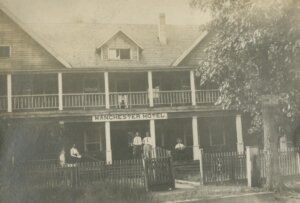
Through the change of company leadership, the community of Manchester continued to thrive. A Birmingham minister who visited for a summer revival in 1913 found the village’s population of 600 to be “a citizenship of a high order,” with a spirit of cooperation and harmony. The fates of the like-named community and mill were linked. Prosperity and hard times were shared by both. The train arrived from Jasper twice daily, carrying mail, passengers and supplies. On the return trip, the train carried Manchester lumber. Visitors to the mill were treated well in the community’s 50-room hotel.
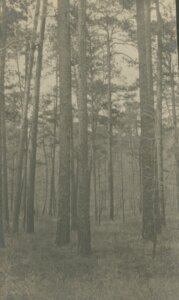
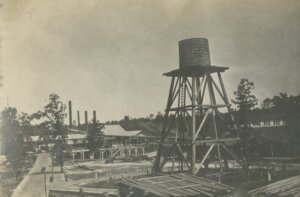
A 1915 photo album shows the rebuilt mill — a tall, wooden structure towering over a retaining pond near Blackwater Creek. Other images show men in wagons lined up in front of the general store and rows of homes for the mill’s white and African American workers. Tall pines frame the background of nearly every photograph in the album.
A 1920s report found that the Birmingham region employed some 22,000 men in its woodlands and sawmills. The Manchester Lumber Co. ranked third on the list of producers. And although timber remained its greatest export, in 1921, there opened around Manchester three small coal mines. The largest of these, the Manchester Mining Co., ran two large steam shovels around the clock with a daily output of 1,100 tons by year’s end. The combined weekly payroll of these new ventures and the lumber company totaled an estimated $8,000 in the Manchester community.
By 1924, however, the vast timber holdings that fueled the company’s production for many years had begun to wane. Executives announced that no new woodlands would be acquired. They would continue in their work until there was no more suitable mature timber on the property and then they would close, bringing to an end a cycle that had begun in 1906.
Logging operations at Manchester came to an end in 1926. Once the last of the lumber was planed and its reserves purchased, the company sold its equipment to the W.M. Smith & Co. plant in Birmingham. Some 150 worker houses and other buildings were put up for auction and relocated. Almost a decade after it fell silent, the company’s steam whistle sang anew. In 1934, a Jasper lumber mill acquired the device and placed it back into service, calling lumbermen to their daily tasks. A local reporter noted the history of the whistle and welcomed its husky sound to Jasper.
Even without the existence of the company that gave the place its name, Manchester continued on for many years as a bustling community. Black and white schools opened in the early 1930s, as did a post office. The Alabama Central Railroad rolled on as well, servicing the surrounding coal mines and ferrying people to and from Manchester and other parts of rural Walker County. The line eventually extended to some 16 miles at its peak. It ceased operations in 1961. In the community of Manchester today, little remains of the lumber company that sustained the place for nearly two decades. Like many Alabama businesses, it now exists mostly in photographs, tucked-away papers and family memories.
Historian Scotty E. Kirkland is a freelance contributor to Business Alabama. He lives in Wetumpka.
This article appears in the October 2026 issue of Business Alabama.