With shiny shovels in hand, local and state leaders love to pitch some red Alabama dirt for pictures at new economic development sites.
Months of negotiation, discussion and wrangling — often top secret — are behind each big announcement.
And a key factor in all that negotiation, discussion and wrangling can be whether there is enough potential power to keep these new plants, factories and offices humming.
Utility and infrastructure capacity is in fact the No. 1 factor in the site selection process, says Alabama Commerce Secretary Ellen McNair. The Commerce Department pays close attention to what site selectors are looking for as they shop projects, she says.
“Alabama’s power suppliers are vital partners in the effort to recruit and retain industry,” says McNair. “Every project we work must have energy, and our power partners are engaged early on every single project we work.”
Lack of power is the deal-breaker. That means that in Alabama, three of the biggest players in bringing new business to the state are Alabama Power, PowerSouth and the Tennessee Valley Authority.
Alabama Power
For more than 100 years, Alabama Power’s economic development team has worked with companies from initial conversations to operating a facility, says Patrick Murphy, its vice president of economic development.
Alabama Power has 1.5 million customers across 45,000 square miles in the southern two-thirds of Alabama, making it the provider to the largest geographical area of the state.
“Each of those projects required close coordination with the Economic Development Partnership of Alabama, the Alabama Department of Commerce, the local chambers and development authorities throughout Alabama,” says Murphy.
The Alabama Power team assists at each stage, including site identification, infrastructure assessment and operating cost analysis, he says. The utility provider is well positioned to bring future business to Alabama, he says.
“Our planning horizon runs decades out, not just years, and our integrated resource plan is updated continuously as we see new demand coming onto the system,” Murphy says. “Over the last several years, we’ve secured regulatory approval for additional capacity that serves a retail load that includes new natural gas generation, solar and battery storage.”
Alabama Power has played a role in some of the most transformative economic developments in the state’s history, says Murphy. They include Mercedes-Benz U.S. International in Vance, Airbus in Mobile, Hyundai Motor Manufacturing Alabama in Montgomery and Honda Manufacturing of Alabama in Lincoln.
Those get the most attention, but Alabama Power’s impact also extends to smaller customers like Two Rivers Lumber Company in Coosa County, Bad Boy Mowers in Monroeville and Heiche Group in Walker County, he notes.
The company’s economic development team works closely with communities to prepare for growth, particularly with site development. The Spec Building Program, established in 1991, has helped position more than 20 communities across Alabama to successfully attract new industry, Murphy says.
Their team brings grid knowledge, site readiness data, infrastructure planning skills and workforce analytics.
In terms of future needs, large-load customers may require grid updates, but they bear the cost under oversight of the Alabama Public Service Commission. Costs are not shifted to smaller customers, Murphy says.
Thanks to constant conversation with site selectors, the state, communities and regulators, before a major project begins, “We know the generation and transmission needed to serve it, and we’ve started the planning process to deliver it,” he says.
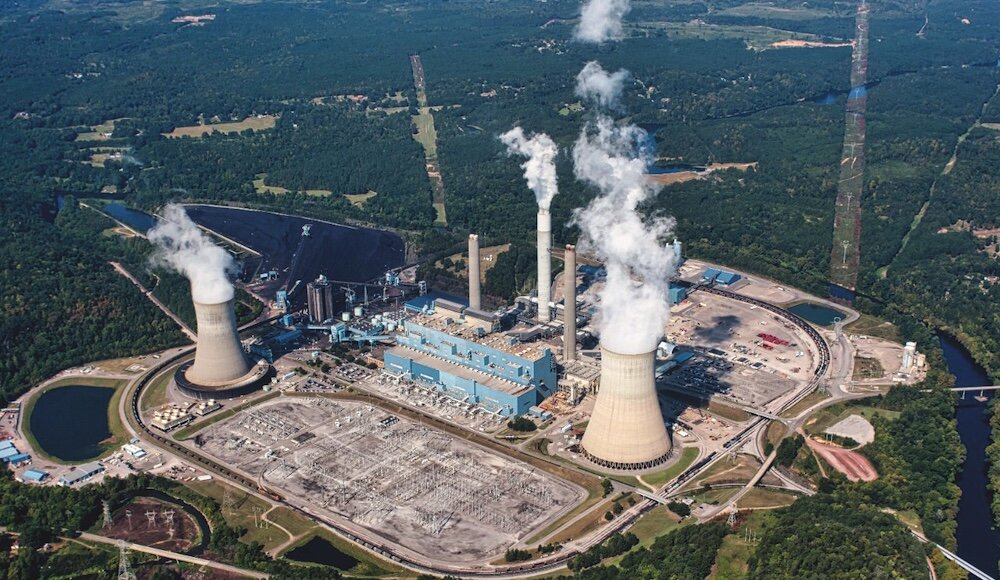
The diverse Alabama Power portfolio that includes natural gas, coal, nuclear, hydro, solar and battery storage protects customers from fuel price swings, weather events, peak demand and shifts in market conditions, they say.
Nuclear has been a factor for decades, but they monitor all next-generation technologies to see if they are the right fit for Alabama based on cost, technology maturity and regulatory factors.
“When we need new resources, we evaluate every option on cost, reliability and community impact, and we bring our recommendations to the Alabama Public Service Commission for approval,” Murphy says.

TVA
The Tennessee Valley Authority serves 17 counties in north Alabama. Nearly half of Alabama’s 100 largest companies by employment are in TVA’s region. With its state and local partners, TVA has supported more than $8.5 billion in economic development, creating more than 10,900 new jobs and retaining 39,000 jobs in the past five years, officials say.
In March, submarine components manufacturer Hadrian announced plans to invest $2 billion to establish operations in Colbert County. Cold-storage company Envision Cold said it will invest nearly $67 million in Marshall County.
The biggest announcement came right before Christmas.
Pharmaceutical company Eli Lilly said in December 2025 it will build a $6 billion advanced manufacturing facility in Huntsville — the largest such initial investment in Alabama history.
The announcement was a surprise to many local residents, but TVA was part of the team working behind the scenes for months to land the deal.
Penny Townson, a TVA regional economic development consultant with the Huntsville office, was involved in the Lilly project.
“Eli Lilly we worked on for over a year before it made its way into the press. It was a pretty consistent grind, really, in making sure that they felt supported from the power side, from the workforce side, the land availability,” Townson says. “All of that really comes down to the team and making sure that we are mitigating risk at every step of the process.”
“It makes a huge difference when a company can connect to a place,” says Townson.
TVA and local leaders have to assess the potential labor force, roads and what “the power story is going to look like,” she says, and address any gaps.
“We’re really fortunate to get to pick and choose what we want to land. The site that Eli Lilly landed on had been owned by the community. And since I’ve been at TVA, I don’t think they submitted that land on any other projects.”
TVA Vice President of Economic Development Heidi Smith has been with the economic development team at TVA for 23 years. She calls that work part of its “mission of service.”
“Our goal with our business unit is to create and retain jobs and capital investment,” says Smith. That’s done through a partnership with local power companies and economic development agencies and the state Department of Commerce.
TVA helps with site selection as well as customized training for the local or state team.
“We offer incentives. We have a technical service group. And when you think about that, that is like a mini engineering firm, if you will. We’ve got landscape architects, we’ve got a CAD drafter, we’ve got a GIS specialist — all of this is in that vein of hoping to help create those jobs and investment, whether it’s a new industry or it’s an expanding industry.”
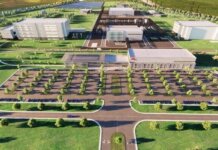
The TVA tech services group did 3-D and 2-D renderings and graphics of the building layout and other details “so that Eli Lilly could see themselves on the site,” Smith says.
An available property site and promise of a trained workforce are major components in such decisions.
“Those types of activities really make a difference to companies, whether they’re expanding or creating a new investment or a new location in a community,” says Smith.
Regional TVA spokesperson Clarissa McClain says the utility is always planning for future economic expansion.
“We do have a plan for that and how we’re building out for that in terms of making sure that we have enough generation and then also infrastructure improvements to our transmission system as well, so it can actually be distributed effectively to the areas that are growing,” McClain says. “We feel that we’re prepared to meet that growth based on the strategy that we have.”
Three additional units at the Colbert County Combustion Turbine Plant started commercial operation in July 2023. In December 2025, the Nuclear Regulatory Commission renewed operating licenses for all three boiling-water reactors at Browns Ferry Nuclear Plant for another 20 years, allowing TVA to operate the plant into the mid-2050s, McClain says.
“I think we’re working about 30 active projects” that might come to the TVA service area, Smith says. “Will all of those locate? Will all of those decide to move forward? We don’t know.”
PowerSouth
PowerSouth Energy Cooperative provides wholesale power to 18 cooperatives and four municipalities in Alabama, serving more than 800,000 customers in 39 counties in south Alabama and 10 in northwest Florida.
Taylor A. Williams is vice president of external affairs for PowerSouth.
The cooperative takes a measured approach in meeting needs of existing industry, organic growth and the demands of new business, says Williams. All the while, they have to balance affordability and reliability.
PowerSouth has served on the project management team for many major projects that landed in Alabama, he says.
“Our 18 Alabama electric cooperative members have seen a significant amount of growth over the past several years. The automotive, forest products and aerospace sectors have been three leading sectors for projects in our service area,” he says.
“We play a critical role in the recruitment process — not only in ensuring companies have access to the infrastructure they need at a competitive rate, but also working alongside state, regional and local economic developers,” Williams says.
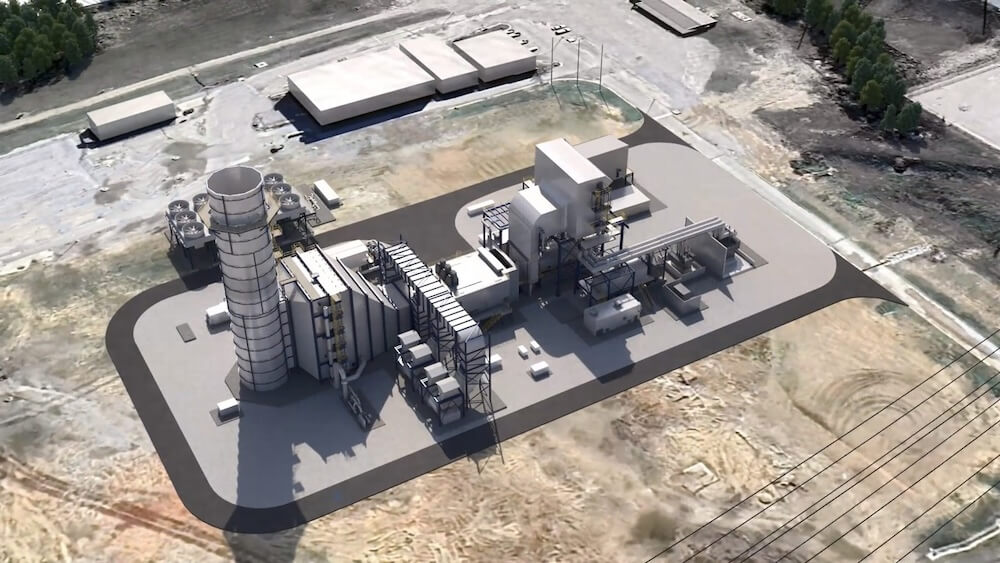
PowerSouth is currently expanding the Lowman Energy Center in Leroy and looking at ways to secure capacity for the future.
Like all power providers, they, too, have to consider accommodating data centers. They’ve seen some interest in those and other large-load projects, Williams says.
“We evaluate each one on a case-by-case basis and have developed a process to study the infrastructure required, determine the cost of service and develop a timeline for delivery,” says Williams. “Once we have those answers, it’s about finding a solution to meet the needs of industry while protecting affordability and reliability for our members.”
Deborah Storey is a Huntsville-based freelance contributor to Business Alabama.
This article appears in the June 2026 issue of Business Alabama.