Retirement is supposed to make life bigger. The calendar opens. The alarm clock quiets. The meetings vanish. For perhaps the first time in decades, there is nowhere you absolutely have to be. No one is demanding your time or paying for your attention.
And then, sometimes, the world starts to shrink.
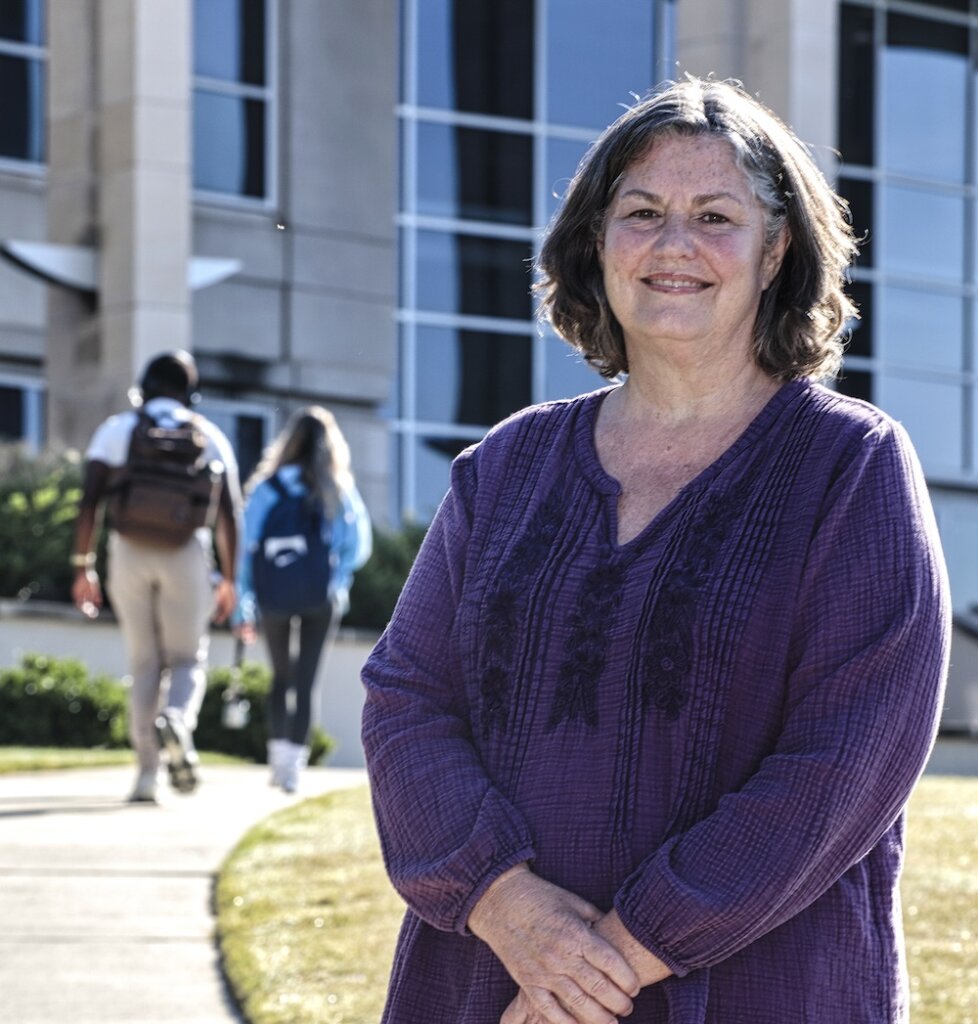
“One of the biggest surprises, I think, for any of us who leave the workforce, is how quickly the world can get really small,” says Jill Stewart, who now sits on the OLLI board of directors at the University of Alabama in Huntsville. “Unlimited leisure is not all that it’s cracked up to be.”
Stewart knows. After a career, children and all the rhythms and responsibilities that fill a life, she found herself searching for something she had wanted decades earlier — the chance to walk onto a college campus and learn simply because something interested her. No degree to earn. No career ladder to climb. No test on Friday. At the University of Alabama in Huntsville, she found it in the Osher Lifelong Learning Institute.
“What I had been looking for in 1974 was in my backyard at UAH,” she says. “And it’s just absolutely enriched this season of life for me.”
No Grades. No Tests. Just Learning.
Known nationally as OLLI, Osher Lifelong Learning Institutes are university-based learning communities built primarily for adults 50 and older. Supported through the Bernard Osher Foundation, the network reaches 125 colleges and universities nationwide. Alabama has three — at UAH, the University of Alabama and Auburn University — each with its own personality but built around the same premise: Curiosity does not come with an expiration date.
At UAH, the philosophy is distilled into a very simple motto: Never Stop Learning.
Members study everything from history, literature and music to science, foreign languages, popular culture and health. They can try tai chi, study nuclear fusion, explore cryptology or even learn geocaching. There are no grades or tests, and nobody is particularly concerned with whether a class will look good on a résumé. The point is simply to learn.
“You can dip your toe in or you can jump in completely,” says Clay Williams, program manager for OLLI at UAH. “And I think that’s the remarkable thing about it — that you can find the thing that really fits you.”
Some jump. Others cannonball.
A Student Again
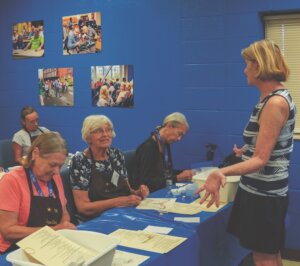
Alison Toney initially thought that OLLI probably wasn’t for her. A UAH graduate, Toney had received information about the program for years. In her 50s, she imagined something closer to traditional college — classes several times a week and another rigid commitment competing with travel and grandchildren.
Later, she took another look. The classes were shorter. Many met only once a week. There were no tests. And there were dozens of subjects from which to choose.
“I always loved reading and learning,” Toney says, “and I thought ‘I’m going to give that a try.’”
Trying it turned into eight to 12 different courses during some terms. Then came events. Next came travel. Toney has journeyed domestically and internationally with OLLI, including a small-ship cruise along the Dalmatian Coast through Croatia, Albania, Montenegro and Greece, and she recently returned from Africa.
Classes in literature, theater, music and history are among her favorites. Ironically, despite holding a Ph.D. in molecular biology, Toney says she usually steers away from science.
“I guess I figured I had enough of that,” she says. “I was going to do something fun.”
Four years after joining, Toney’s involvement reaches well beyond the classroom. She now serves on the OLLI board and on several committees. Her daughter has noticed the transformation. Toney describes herself as an introvert and a homebody, but trips and shared experiences gradually turned classmates into close friends. Group texts began. Invitations to concerts, movies and theater followed.
“You can kind of reinvent yourself in your retirement years,” she says.
That reinvention has occasionally surprised even her.
“I’ve never thought of myself as adventurous,” she says. “But I’ve ziplined in Costa Rica. I flew in a helicopter over Victoria Falls … I’m stretching my boundaries.”
Back to 1,000
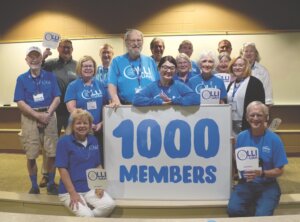
The individual experience is part of a larger comeback story at UAH. Before the pandemic, OLLI at UAH had reached the 1,000-member mark. Then classrooms emptied. Memberships fell to the mid-500s, and a program built around gathering had to figure out how to stay together in a world where people remained more apart than ever.
Stewart, who served in OLLI leadership during the pandemic, remembers the staff pivoting quickly. Classes moved to Zoom. Virtual programming emerged. Members found ways to continue seeing one another through computer screens. It wasn’t the same, but it was something.
Williams arrived at UAH in March 2022 while enrollment was still recovering. Since then, classrooms have filled, waiting lists have returned, and, in 2026, OLLI finally climbed back.
“It’s been a good membership,” Williams says. “We’re tickled to be at 1,000.”
Zoom never disappeared completely. Roughly 20 to 25 of UAH’s 60 to 70 courses still include an online component, particularly valuable for members facing health or transportation challenges.
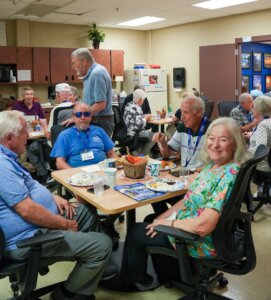
But when people can come in person, many do. Because, while the learning may begin in the classroom, the relationships rarely end there. Members linger over coffee. Conversations continue in the lounge. People who arrived knowing no one gradually learn names, stories and histories. Veteran members welcome newcomers. Name badges spark introductions. New members are encouraged not merely to attend, but to participate.
“A sense of belonging,” Stewart calls it.
Williams puts it another way. “We try to be a family. And I think that’s key … I think that’s what people want. If they don’t feel like they belong, they’re not going to come back.”
Learning & Living Together
For Stewart, words like “belonging” and “family” are more than promotional language. Widowed 13 years ago with three grown children living out of state, she originally came to OLLI for classes and eventually became president. The man who succeeded her as president became something else later, too — her husband. They married last year, both in their 70s. And they’re not the only couple whose paths have merged through OLLI. That may explain why describing the institutes merely as “continuing education” misses much of what happens inside. The courses matter. But so do the coffee conversations, the lunches, the trips and the friendships.
For someone entering retirement after decades of professional structure, OLLI can restore something surprisingly easy to lose — a reason to put an event on the calendar.
Williams says it’s all about “getting people involved, giving them a reason to get out of bed.”
It can also provide somewhere to remain useful. Williams estimates that about 95% of UAH instructors are volunteers. Many are OLLI members themselves — retired professionals, lifelong hobbyists and experienced experts eager to share subjects that they spent decades learning. And, often, the teachers discover that they are still students themselves.
A Statewide Classroom
That culture extends beyond Huntsville. At the University of Alabama, OLLI offers courses, field trips, social events, public programs and travel opportunities in Tuscaloosa, Northport and several Birmingham-area communities. At Auburn University, members can move from classroom seminars to studio arts, outdoor activities and travel.
Different campuses. Different communities. The same restless curiosity. The three institutes also collaborate through OLLI Shares, opening select online courses to members across Alabama’s statewide network. In that sense, OLLI has created something unusual in higher education. People return to campus not because they need another credential, but because they still want what college was always supposed to offer at its best — discovery.
For some, that even means returning to the campus where their story began. At least 10% of UAH’s OLLI members are university graduates. They once walked those halls chasing degrees and careers. Decades later, they return for an entirely different reason. Not to prepare for life, but to keep living it fully.
Josh Givens and Dennis Keim are freelance contributors to Business Alabama. Givens is based in Mobile and Keim in Huntsville.
This article appears in the November 2026 issue of Business Alabama.