The beaten path in Alabama is filled with well-known tourist attractions. There is that battleship in Mobile and rocket ships in Huntsville. Numerous Civil Rights sites can be found in Birmingham, Montgomery and Selma. The Swampers picked a song or two in Muscle Shoals, while farmers picked peanuts in Dothan, and both are now popular places for tourism. And there’s the beach.
Venture off that path, however, and there is still plenty to see and do. In fact, some of Alabama’s most interesting attractions are unknown even to longtime residents of the state. Yes, we’re all likely to head to the beach or mountains at some point. But here are some suggestions of other places to visit as well. Call it Alternative Alabama.
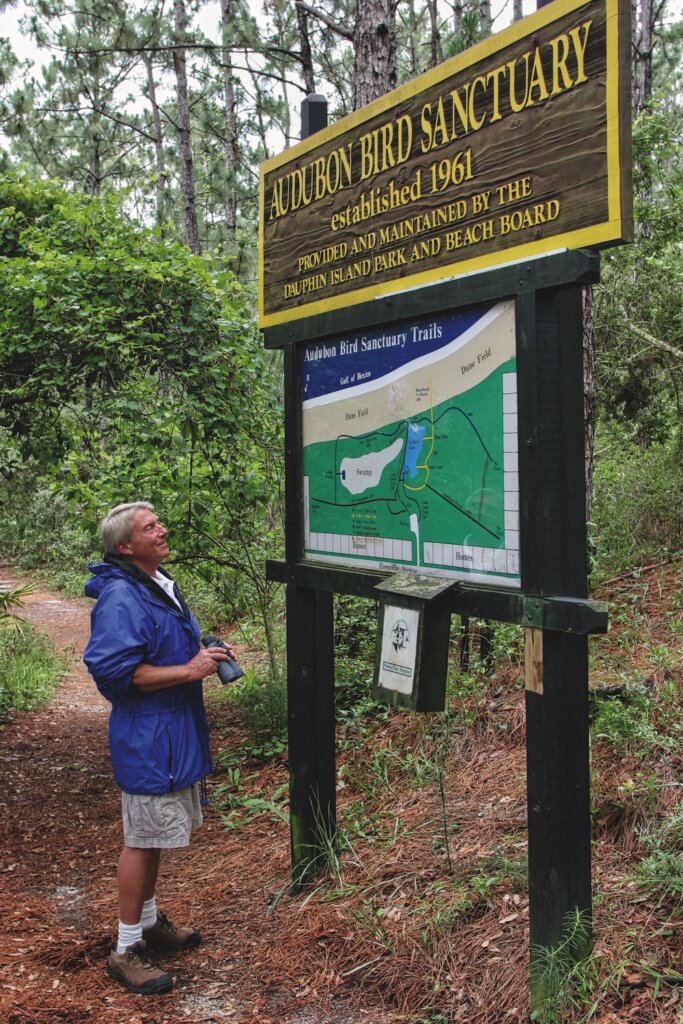
Dauphin Island Audubon Bird Sanctuary | Visitors to secluded Dauphin Island usually cross the bridge and then turn right, heading down the narrow stretch of road leading to vacation homes and rentals. Next time, start by turning left, and within minutes you will be at this beautiful 164-acre woodland sanctuary.
In place of white sand, visitors are greeted by pines, oaks and magnolias. And lots of birds, especially during the spring and fall migration periods, when the entire island is transformed into a rest area for the feathered flocks. A highlight of the sanctuary is a 1,000-foot-long, handicap accessible boardwalk that leads to a wharf overlooking Galliard Lake.
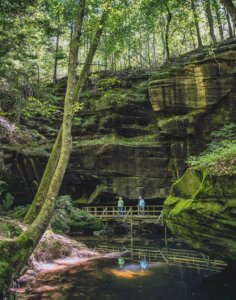
Dismals Canyon (Phil Campbell) | Despite its name, there is nothing dismal about this 85-acre nature conservatory, which was designated a “National Natural Landmark” in 1975. Instead, the sandstone gorge is filled with forests, large boulders, grottos, caves, bluffs and a few waterfalls.
Of special interest is the light show put on by the area’s glowworms, known as Dismalites. Found in only a handful of locations around the world, particularly Australia and New Zealand, these glowworms illuminate the night with their blue-green bioluminescence. Guided tours are offered to see the creatures, with peak seasons taking place in late spring and early fall.
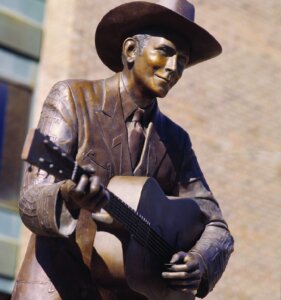
Hank Williams Memorial & Gravesite (Montgomery) | Mississippi and Tennessee have plenty of places honoring Elvis Presley. But nearly a decade before the “King of Rock ’n Roll” became famous, Alabama had the “King of Country Music” in Hank Williams.
Born in Mount Olive, Williams’ final resting place is at the Oakwood Cemetery Annex near downtown Montgomery. The distinctive gravesite has two marble monuments (one for his wife Audrey), a marble replica of his cowboy hat, engraved song titles and lyrics, and Astroturf on the ground because fans kept pulling out the natural grass to keep as a souvenir.
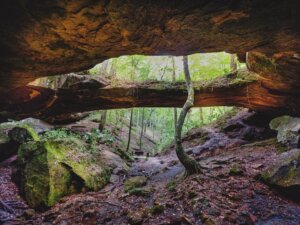
Natural Bridge Park (near Haleyville) | One issue involving many natural attractions is they are not easy to reach. That definitely is not the case with this 148-foot-long, 60-foot-high sandstone bridge. The park is located less than a half-mile off U.S. Highway 278, and the bridge itself is just a few hundred yards from the parking lot.
For those who want to hike, the 150-acre park also has a 2-mile-long trail that leads to a waterfall. There is a picnic area as well. But if all you want to do is take a quick look at the longest natural bridge east of the Rocky Mountains, it can be done in about 15 minutes.

Orbix Hot Glass (Fort Payne) | Little River Canyon National Preserve is one of those “beaten-path” attractions that is well known throughout the state. Right next to it on 26 acres of land is the much lesser-known Orbix Hot Glass shop, a glassblowing studio and gallery that has been in business for nearly 25 years.
A wide variety of colorful glass objects are available for purchase (or to just admire), including pitchers, vases, ornaments, decanters and paperweights. In addition, the shop produces special glass items as part of its University of Alabama and Auburn University collections.
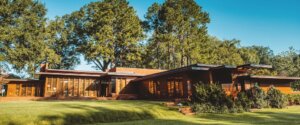
Rosenbaum House (Florence) | According to the Frank Lloyd Wright Trust, more than 60 structures in the United States that were designed by the famed architect are currently open to the public for viewing. Only one, the Rosenbaum House, is located in Alabama.
Built in 1939-40, the Rosenbaum House is considered to be one of the best examples of Wright’s style of Usonian architecture, which emphasizes flat roofs, low ceilings, open floor plans, and large windows. And unlike most FLW public homes, the Rosenbaum House also contains many pieces of the original furniture designed by Wright.
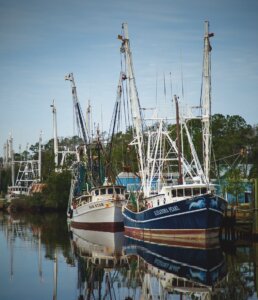
Shell Belt Road (Bayou La Batre) | Sometimes it is more about the journey than the actual destination. An example is the barely 5-mile-long trip along Shell Belt Road from Bayou La Batre to the shores of Portersville Bay.
This road runs alongside the Mississippi Sound, passing shrimp boats and seafood shacks along the way. You also will see a few major ship builders working on massive vessels located just off the road. And, of course, there will be numerous waterbirds sunning themselves on old piers, wondering how someone discovered their secret hideaway.
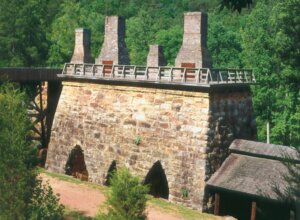
Tannehill Ironworks Historical State Park (McCalla) | The steel industry in Birmingham is honored through such popular sites as Sloss Furnaces and the Vulcan statue. A lesser-known tribute can be found about 30 miles southwest of Birmingham at Tannehill, which showcases the preserved remnants of an old iron-making complex.
The 1,500-acre park offers many traditional outdoor activities such as hiking, fishing and camping. But visitors also can explore the 19th-century furnace stacks and coke ovens, and learn more about the history of the site through blacksmith and other trade demonstrations.
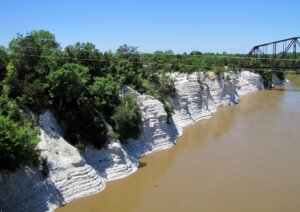
White Cliffs of Epes | While most people have heard of England’s White Cliffs of Dover, few are familiar with Alabama’s White Cliffs of Epes, which stretch for about a mile along the Tombigbee River near Livingston. But the two attractions are basically the same: picturesque bluffs coated with a distinctive white-chalk limestone.
Alabama’s white cliffs are not well publicized, and also not easy to see from land. U.S. Highway 11 near Interstate 20 runs nearby, but good views from the road are limited. Still, even a glimpse of the striking white bluffs shimmering in the sun makes this one of the state’s most distinctive scenic attractions.

Wilson Dam and Waterfall (Muscle Shoals) | For an up-close look at a state attraction, there is the man-made Wilson Dam and the nearby natural waterfall. The dam, which was built in the early 1920s, remains an impressive visual, stretching for more than 4,500 feet across the Tennessee River.
On the southern side of the river, Rock Pile Road leads to an easy walking path that visitors can take to near the edge of the dam. Along the way, a small waterfall emerges from a high rock cliff, providing an intriguing contrast between man and nature visible from one location.
Cary Estes is a Birmingham-based freelance contributor to Business Alabama.
This article appears in the February 2026 issue of Business Alabama.