By Julio Villafuerte, FASM
CenterLine (Windsor) Limited, Ontario, Canada
Aerospace and defense fleets depend on components designed to deliver reliable service over long operating lives. Yet when those components enter maintenance, repair and overhaul (MRO), their condition is rarely predictable. Wear, corrosion and localized material loss can vary considerably from one component to another, creating a difficult challenge on how to perform their restoration efficiently and consistently without replacing.
Cold spray provides one answer. The process accelerates metallic powder particles to high velocity, causing them to bond to a component through impact and plastic deformation. Unlike conventional thermal deposition processes, the material is deposited without thermally affecting the substrate, making it particularly attractive for dimensional restoration of high-value thermally sensitive components.
For decades, CenterLine’s Supersonic Spray Technology (SST) has brought cold spray into practical industrial repair applications using both manual and robotic systems. Manual repair provides flexibility when every damaged component is different, while robotic processing offers consistency and repeatability. For aerospace MRO, however, combining those advantages has historically been difficult. Conventional robotic repair can require accurate component models, detailed measurements, specialized programming and setup before deposition begins.
SST Cold Spray Smart Repair addresses this challenge by connecting the actual condition of the component directly to robotic execution.
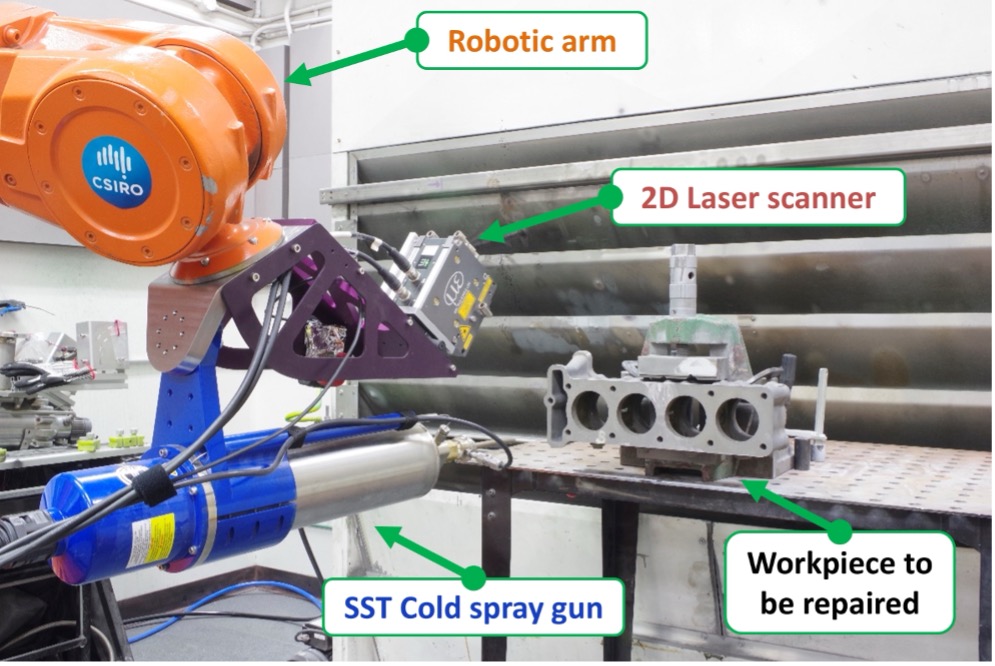
Developed through collaboration between CenterLine (Windsor) Limited and CSIRO, Australia’s national science agency, the Smart Repair concept integrates SST cold spray equipment with CSIRO’s Continuous3D digital platform and in-cell scanning.
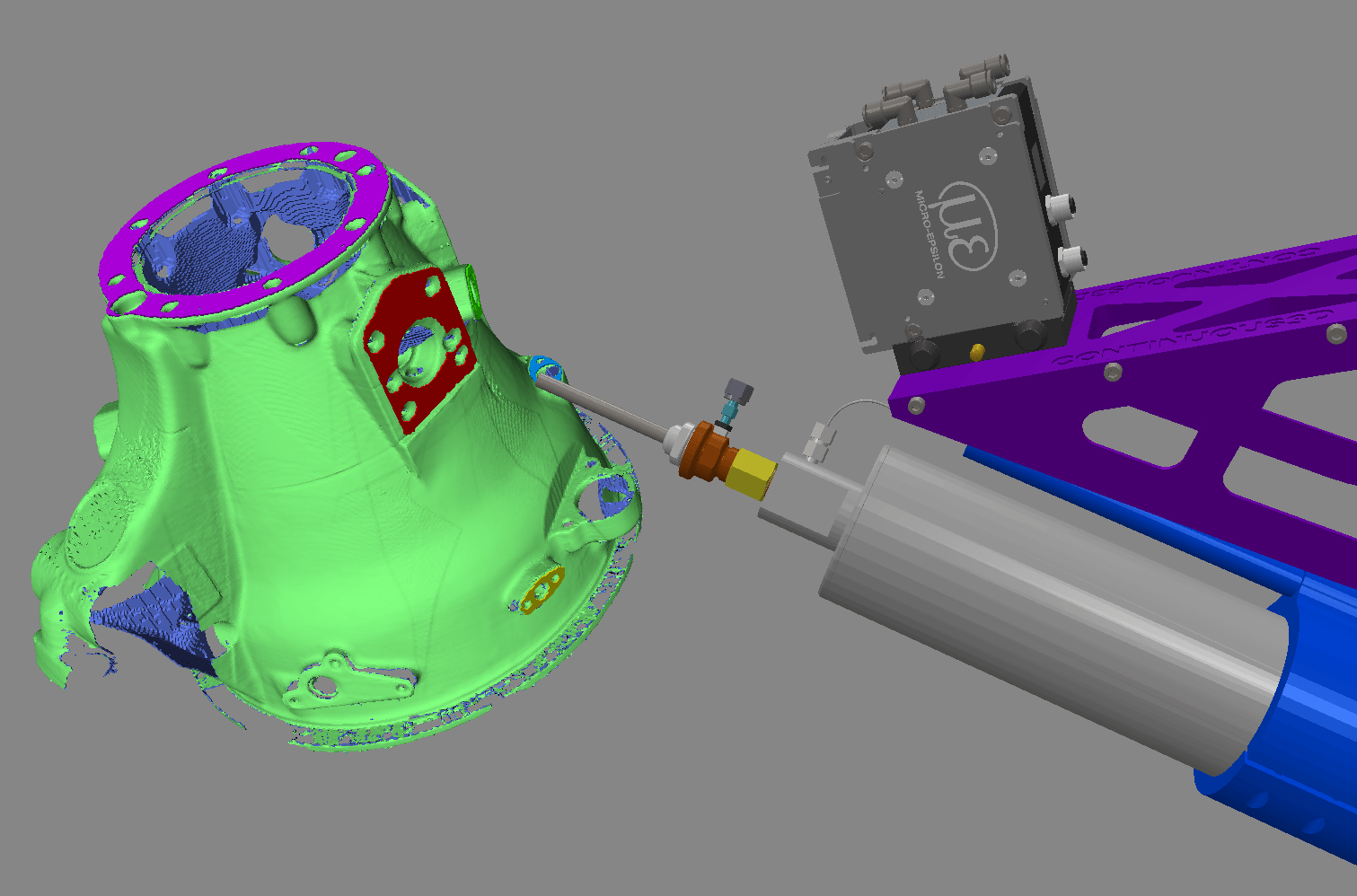
Rather than beginning with an assumption that every component matches its original geometry, the process begins with the component itself. Scanning captures its current geometry, allowing repair areas to be identified from the measured condition of the part. The digital system then supports repair planning, robot-path generation and validation before directing the cold spray deposition process.
This creates a connected workflow from scan to repair, while the operator maintains oversight of the process.
The approach has already been demonstrated on a magnesium PT6 gearbox housing containing multiple areas requiring restoration. The component geometry was captured in the repair cell, different repair regions were identified, and validated robotic toolpaths were generated for cold spray deposition. The demonstration showed how digital scanning and automated path planning can make robotic processing practical even when repair requirements vary from part to part.
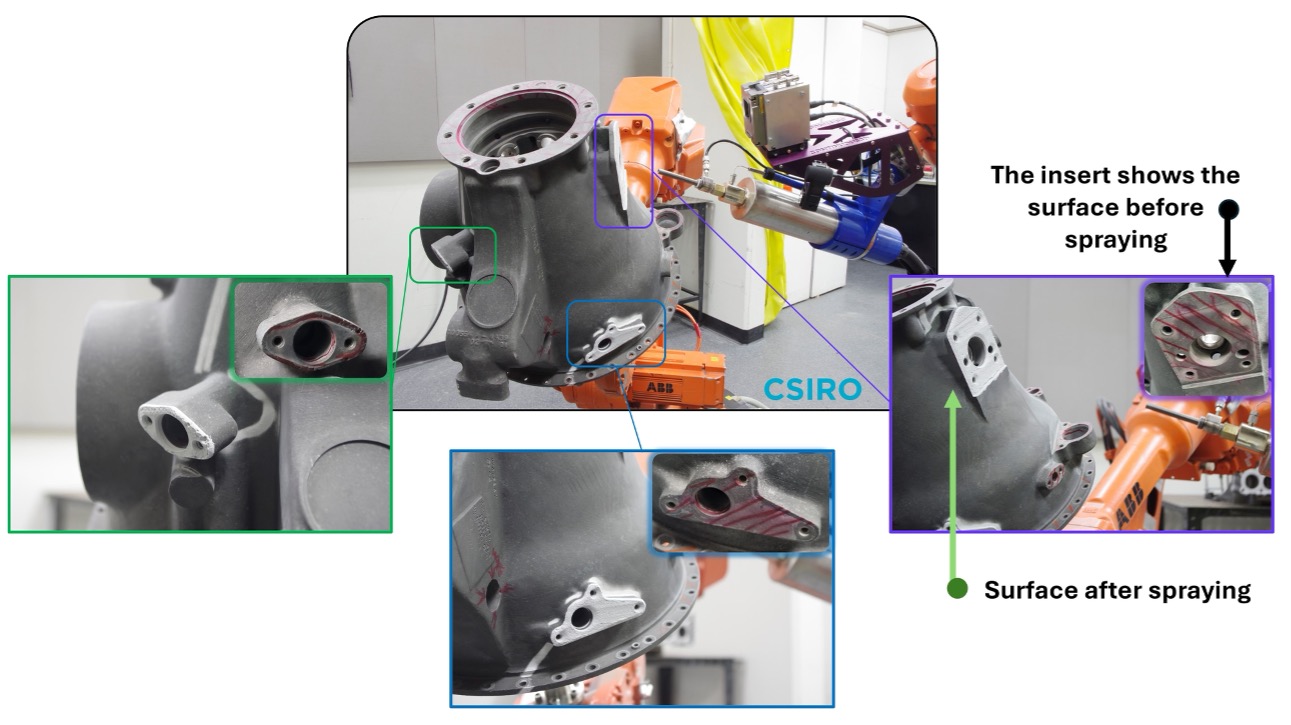
For aerospace and defense MRO operations, the implications extend beyond automation itself. Reducing the engineering and programming effort associated with individual components can make robotic cold spray more practical for low-volume and non-repetitive work. Robotic execution can also improve process consistency and reduce direct operator exposure during deposition.
Smart Repair represents an important evolution in component restoration: instead of forcing a damaged component to conform to a predetermined automation program, the repair process adapts to the component.
By connecting actual component geometry with digital planning and SST cold spray deposition, Smart Repair offers aerospace and defense organizations a more flexible path toward restoring valuable assets and extending their useful service life.