The morning light spills across Flagg Mountain in Coosa County, revealing the southernmost reaches of the Appalachians rolling toward a breathtaking horizon. A few hours to the south, paddlers slip quietly through the Mobile-Tensaw Delta beneath towering cypress trees while osprey circle overhead.
Between those two landscapes lie hardwood forests, winding rivers, whitewater rapids, nationally recognized bike trails, sprawling wildlife refuges and thousands of miles of adventure and terrain that continue to surprise even lifelong Alabamians.
You see, that’s the paradox of Alabama.
For generations, the state has been known for college football, civil rights history, small-town southern hospitality and Gulf Coast beaches. Yet one of its greatest assets has often gone overlooked — an astonishing variety of outdoor experiences packed into a single state.
“There are not many states that can say they have the Appalachian Mountains and the Gulf Coast,” says Paul DeMarco, president of the Alabama Trails Foundation. “The uniqueness of our topography is what draws so many outdoor recreation enthusiasts to our state.”
That diversity has become far more than a point of state pride. Increasingly, it has served as an economic advantage.
Across Alabama, communities are investing in trails, parks, waterways and public spaces that attract visitors, support local businesses and improve quality of life for residents. Outdoor recreation has become a progressively important piece of the state’s tourism economy — and a growing factor in recruiting both new industries and the workforce that follows them.
“Tourism is economic development,” says Pam Swanner, executive director of the Alabama Black Belt Adventures Association. “Not only is it a strong economic development tool, but it also complements the recruitment of industry because we provide these recreational opportunities.”
Interest in the outdoors surged during the COVID-19 pandemic, but unlike many temporary trends and short-lived fads, this one hasn’t subsided or vanished.
“That interest in outdoor recreation has never waned,” Swanner says. “It has continued to grow every year.”
For many visitors, Alabama’s greatest surprise is simply the breadth of what is available. Travelers expecting gentle rolling hills instead discover rugged mountain terrain in the north. Hikers can spend days exploring the Sipsey Wilderness inside Bankhead National Forest or begin the legendary Pinhoti Trail at Flagg Mountain, where the Appalachian foothills start their long journey toward Maine.
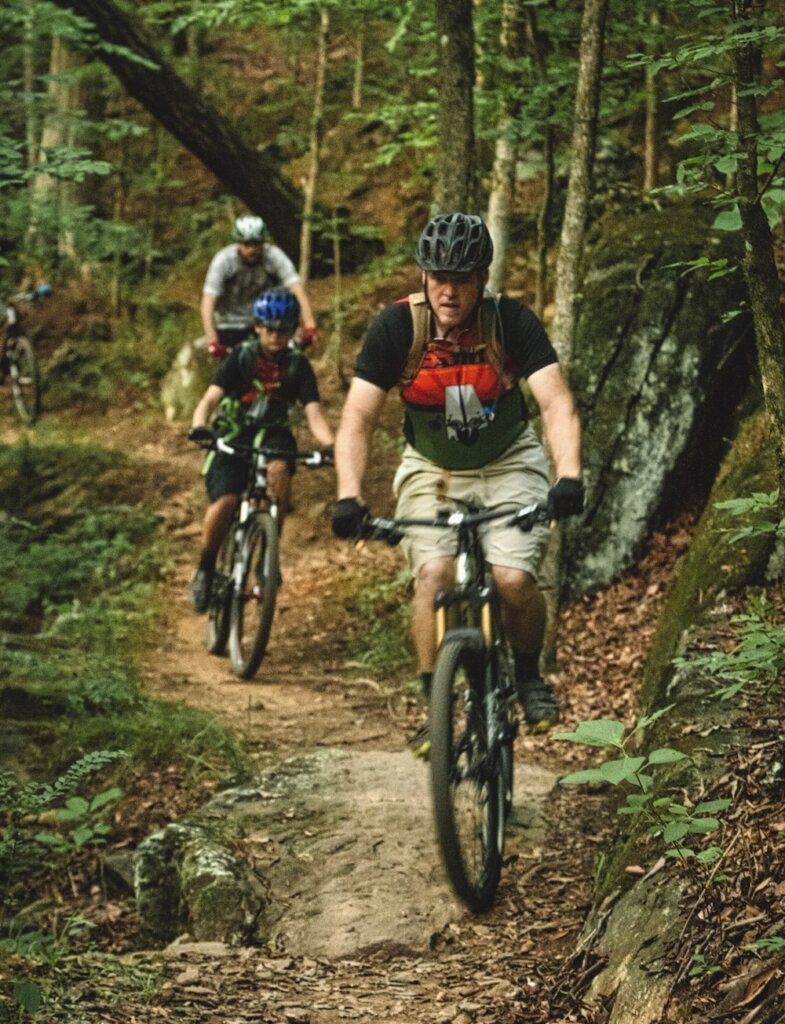
Farther east, cyclists have helped transform communities along the Chief Ladiga Trail into emerging “trail towns.” Mountain bikers travel from across the country to ride Coldwater Mountain near Anniston, while Oak Mountain State Park and Chewacla State Park continue expanding their reputations as premier destinations for riders of every skill level.
“You don’t have to go up to the heart of the Appalachians or the Rockies to really hike some rugged terrain,” DeMarco says. “There’s plenty of it right here.”
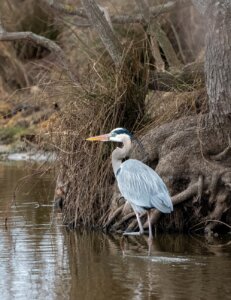
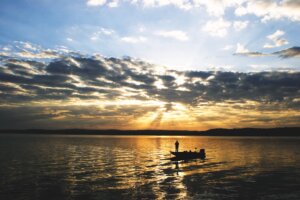
As the landscape changes moving south, so do the experiences. The rivers of the Black Belt become a playground for anglers, canoeists and kayakers. Birdwatchers arrive from around the country to explore one of North America’s richest ecological regions. Lake Eufaula, long known as the Bass Capital of the World, draws serious fishermen, while the Alabama Scenic River Trail links waterways across much of the state for paddlers looking to experience Alabama from a different perspective.
For Swanner, the Black Belt tells a different story than simply outdoor recreation.
“We have something for everybody,” she says. “I mean, there’s something for the naturalist. We’ve got Eufaula National Wildlife Refuge. There’s just so much to appeal and to promote to the outside folks that have an interest in whatever it is. And for the thrill-seeker, we’ve got whitewater rafting in the Black Belt. We’ve got zip lining across from Alabama to Georgia and back, which is the only zip line in the nation that traverses two states.”
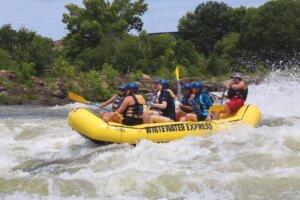
Visitors may begin the day hiking at Perry Lakes or paddling the Alabama River before spending an afternoon with the internationally renowned Gee’s Bend Quilters, browsing Black Belt Treasures Cultural Arts Center in Camden or enjoying southern cooking in one of the region’s historic downtowns.
Outdoor recreation, she says, has become the front door to discovering the culture, history, heritage and hospitality that define the region. The same philosophy is reshaping communities across Alabama. Rather than thinking of trails as isolated recreational amenities, cities now see them as investments that encourage tourism, support restaurants and lodging, improve public health and create places where families want to live.
DeMarco points to the growth of East Alabama’s trail network as one example. The intersection of the Pinhoti Trail, Chief Ladiga Trail, Coldwater Mountain and nearby Cheaha State Park has helped establish the region as one of the Southeast’s emerging outdoor recreation hubs.
Meanwhile, destinations such as Red Mountain Park and Moss Rock Preserve demonstrate that residents don’t have to travel hours into the wilderness to reconnect with nature. Some of Alabama’s most rewarding outdoor experiences exist only minutes from thriving metropolitan areas.
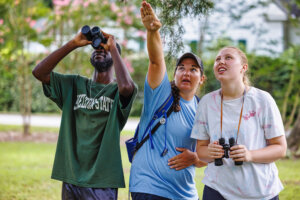
“You don’t have to be a backpacker with an 80-pound pack,” DeMarco says. “There are so many trails you can enjoy without having to think you have to camp.”
That accessibility may prove just as important as Alabama’s geography.
Families looking for an afternoon hike, retirees exploring a scenic greenway, cyclists planning a weekend ride and paddlers renting kayaks for the first time all contribute to an outdoor economy that extends well beyond state parks.
Swanner has watched that transformation firsthand. An economic impact study commissioned by Alabama Black Belt Adventures found tourism in the region growing from $1.3 billion to $3.8 billion in economic impact over several years, reflecting increased visitation and growing interest in outdoor experiences.
The numbers reinforce something both Swanner and DeMarco see every day — Alabama’s outdoors are no longer a hidden gem known only to hunters, anglers and experienced hikers.
They are rapidly becoming part of the state’s identity.
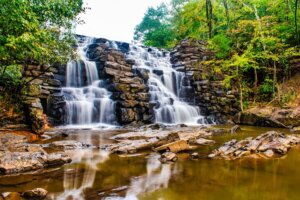
From the waterfalls of the Appalachian foothills to the quiet waters of the Mobile-Tensaw Delta, Alabama offers something increasingly rare — a chance to experience remarkable natural diversity close to home.
Josh Givens is a Mobile-based freelance contributor to Business Alabama.
This article appears in the August 2026 issue of Business Alabama.