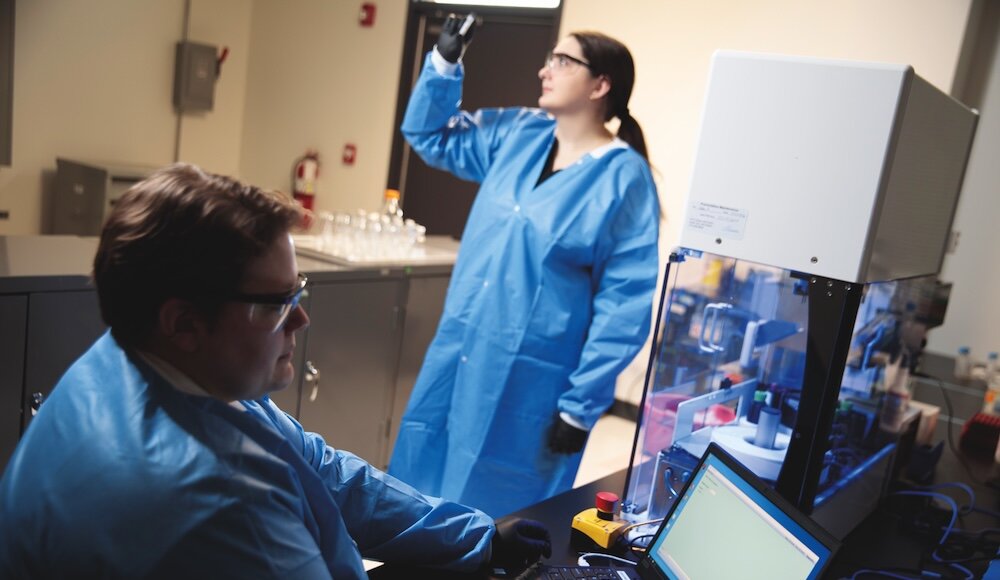
Six Alabama biotech startups participated in the spring gBETA Prosper Healthtech cohort.
During the free seven-week program, participants learned how to grow their early-stage companies via coaching and mentorship provided by gener8tor, a national preaccelerator company.
Valor Scientific
As a professor at Harvard Medical School and St. Jude Children’s Research Hospital, Andrew Kodani and his team studied pediatric rare genetic disorders. To research potential medicines for these patients, the team used stem cells directly from the patients.
Proteins called growth factors are an “important fuel” that enables stem cells to grow and remain as stem cells, Kodani explains. The growth factors are used for developing next-generation medicine, regenerative medicine for cardiac and cancer use, wound healing and consumer skincare products, he notes.
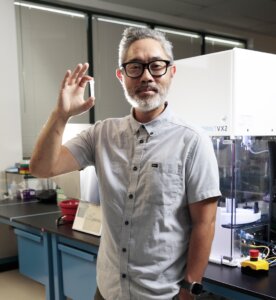
Kodani heads up Valor Scientific, a Madison-based biomanufacturing startup that has developed growth factors for use in stem cell research. The “always hydrated production and purification platform,” he says, is aimed at providing scientists with improved reliability and quality.
As Kodani and his team used stem cells in their research, they noted a “high level of inconsistency” in the quality of these proteins, he notes. The two large U.S. companies that make the proteins moved their manufacturing to China in the past three years. In doing so, they had to determine how to scale their production and also ship their products back to the United States, he says.
These manufacturers began using harsh chemicals during production, causing the proteins to lose their bioactivity, Kodani says. And, to facilitate lengthy shipments back to the United States, the companies freeze-dried the product into a powder. “The consequence of this is that you end up losing the reliability, the reproducibility and the quality of these growth factors, leading to large amounts of variability,” Kodani explains.
He uses a fruit analogy to further explain. “If you think of a dried, damaged growth factor as a raisin, no matter how much water you put back on it, you’ll never turn it back into a grape.”
Realizing that these proteins prefer an aqueous solution to maintain their natural structure, Valor Scientific developed its hydrated platform. “As a result of keeping our proteins in a solution, we have anywhere from two to five times the level of bioactivity compared to anything else on the market,” Kodani says.
The product is for research use only and is not intended for therapeutic use, he adds.
Valor Scientific plans to sell its product to academic labs, stem cell core facilities, startup biotechs and larger biotech firms. For now, it is focused on funding through Series A rounds, Kodani explains.
The next goal is to build a cGMP manufacturing facility here in Alabama, he says. The cGMP — Current Good Manufacturing Practice — is the main regulatory standard for ensuring pharmaceutical quality. It is enforced by the Food and Drug Administration.
Guidelines IQ
A manual or document exists for virtually any policy or procedure at most organizations. But finding those documents can be like sifting through a book the size of “War and Peace.”
This mammoth search can have life or death consequences in medical situations. Addressing this “pain point” drove the formation of Guidelines IQ, a Birmingham-based startup, according to Dr. Stevan Fairburn, founder and CEO.
Fairburn recently completed medical school at the University of Alabama at Birmingham along with a master’s degree in AI and medicine. While working in the intensive care unit at UAB and taking care of “really complicated, critically ill patients,” he reviewed various protocols and guidelines to help these patients, he explains. That required browsing through multiple pages of documents. “By the time I found one answer, we had moved on to the next patient,” he says.
Some data suggests that clinicians will search for answers that they know exist for five to 10 minutes, Fairburn notes. But there’s about a 25% chance that they won’t find that answer at all, he adds. “When clinicians have access to answers that allow them to realize their ideal care and treatment paths, that’s going to create better patient care in the long run.”
With Guidelines IQ, clinical teams will be able to access their own local knowledge base in real time including protocols, guidelines and standard operating procedures, Fairburn explains. So, the knowledge base for a clinic in Tuscaloosa will likely differ from one in Birmingham. “[It will] be a product that best fits their practice, not necessarily them conforming to some national-level AI that’s going to dictate and change their workflows.”
A standard, automated process will be used for customers so that Guidelines IQ can scale the business efficiently, Fairburn says. Evidence-based medical information will be incorporated, but the product won’t include actual patient data like that gathered in electronic health record systems, he says.
End users targeted for the product range from small private practices to large hospital departments and health systems.
The company is currently in the prepilot stage, working on building interest in the product through conversations with UAB and various clinics statewide. Fairburn is hoping to pilot by the first of July.
Nanoxort
Nanoxort, a biomedical startup based in Auburn, has developed a product to help radiologists get better MRI images, leading to a safer experience for patients and improved diagnoses.
In about 40% of MRIs, patients receive an injection of contrast agent right before their scans, according to CEO Tareq Anani, one of three co-founders of Nanoxort. Contrast agents on the market today are made with gadolinium, a toxic heavy metal. While it undergoes a chemical process to make it safer, gadolinium can cause a lot of toxicity in the body, especially with repeated scans over time, Anani explains.
In addition, gadolinium, due to its small size, can leak out of blood vessels when given to patients, Anani says. This can cause a subpar image when a radiologist is trying to see what’s happening with tiny blood vessels.
Nanoxort’s contrast agent, made with iron-based nanoparticles, stays within blood vessels when administered, Anani says. “It helps [radiologists] to better visualize blood vessels and diagnose cardiovascular disease with greater clarity,” he says. Plus, it’s a safer alternative to other contrast agents because of its makeup — iron is a natural component in the human body, he adds.
Nanoxort’s product will first be marketed for cardiovascular use. But long term, the company views it as a platform technology suitable for many different types of MRI scans, from diagnosing cancer to brain disease, Anani says.
The company’s other co-founders are Allan David, associate dean of research for the Samuel Ginn College of Engineering at Auburn University, and Barry Yeh, one of Anani’s doctoral colleagues.
The company is targeting 2030 to launch the contrast agent, Anani says. It first must complete another year of preclinical testing and then about two to three years of clinical testing. In the meantime, like other startups, Nanoxort is trotting the funding trail.
VivoSphere
Ninety percent of the drugs that make it to the clinical study phase will fail, according to Yuan Tian, co-founder and chief technology officer at VivoSphere, another Auburn-based biotech startup.
VivoSphere has developed a technology to help drug discovery teams test many drug compounds early on in the process. This helps pharma companies identify the most promising ones to move forward to the “very expensive” clinical trials phase, Tian explains.
The clinical phase requires testing those compounds on people. “Our goal is to predict human drug response without using real humans because it’s risky, and it’s a cost issue,” Tian says.
VivoSphere developed a tissue engineering technology to recreate this humanlike, three-dimensional environment. When these engineered tissues are used in drug discovery, the corresponding drug response will be similar to the response in a human body, Tian explains.
And since the VivoSphere model is scalable and reproducible, it’s possible to make many humanlike mini-tissues very quickly, he notes, making it easier to test thousands of drug compounds.
VivoSphere’s technology is also meeting a call by the FDA and the National Institutes of Health to reduce reliance on animal testing in clinical studies, Tian says.
Customers for the technology include pharmaceutical companies; contract research organizations — CROs — which provide services to pharmaceutical companies; and academic research institutions, he says.
VivoSphere is currently involved in beta testing with industry partners to prepare for product launch and “in discussions” about a manufacturing site, Tian adds.
The company was born in 2022 when Tian, who had completed his doctorate in chemical engineering at Auburn University, teamed up with his doctoral advisor, Elizabeth Lipke. She also is a co-founder of VivoSphere and chief scientific officer.
VivoSphere won $100,000 in startup funding in this spring’s Alabama Launchpad competition.
MAMU Digital Solutions
MAMU is a healthcare infrastructure platform that enables the compression of medical imaging data, significantly reducing storage and infrastructure costs for medical facilities, says founder Stephanie Aguilera, a doctoral student in UAB’s Department of Biomedical Engineering.
Others have tried to compress medical images like MRI scans to reduce the storage costs that medical facilities pay for PACS — Picture Archiving and Communication System, Aguilera says. “[But these attempts] always compromise on the quality or the resolution of the image,” she explains. Radiologists need images to be crisp to inform a patient’s diagnosis.
With its algorithm, MAMU has succeeded “in maintaining image fidelity through lossless compression and decompression across several different imaging modalities, including MRI, CT and ultrasound,” Aguilera says.
MAMU is in the “really early stage” of planning, including where to pilot its product, she says. UAB is, of course, being considered, she adds.
Celestia Life Sciences
After having a case of acute COVID, Mendel Fishman had lingering symptoms of fatigue, brain fog and shortness of breath. For more than a year, he sought a diagnosis through imaging and lab tests and visits to specialists, totaling around $15,000 in personal and insurance costs. Finally, he was diagnosed with long COVID.
His personal experience propelled Fishman to found Celestia Life Sciences. The company is a member of Station 41, a biotechnology commercialization hub at Southern Research in Birmingham, he says.
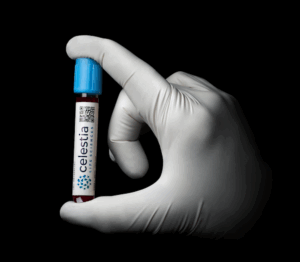
Long COVID is “medicine’s blind spot,” says CEO Fishman. “There are 30 million patients in the U.S. that don’t have good ways to receive a diagnosis [of long COVID], and the treatment path is still very underformed, underinvested, and it costs people their careers, their family life, their social relationships.”
Celestia is building a digital platform to collect data from both patients and clinicians while following healthcare privacy guidelines. This data will be used to develop better diagnostics and therapeutics for long COVID, Fishman explains.
He views the data gathering as a way “to create the infrastructure that is currently missing from this area of medicine.” This, he says, is why there has been so little innovation in this space.
Celestia has not set a launch date for its platform, according to Fishman.
“Alabama has a growing life science ecosystem, and we’re excited to be a part of it.”
Nancy Randall and Dennis Keim are freelance contributors to Business Alabama. She is based in Tuscaloosa and he in Huntsville.
This article appears in the July 2026 issue of Business Alabama.