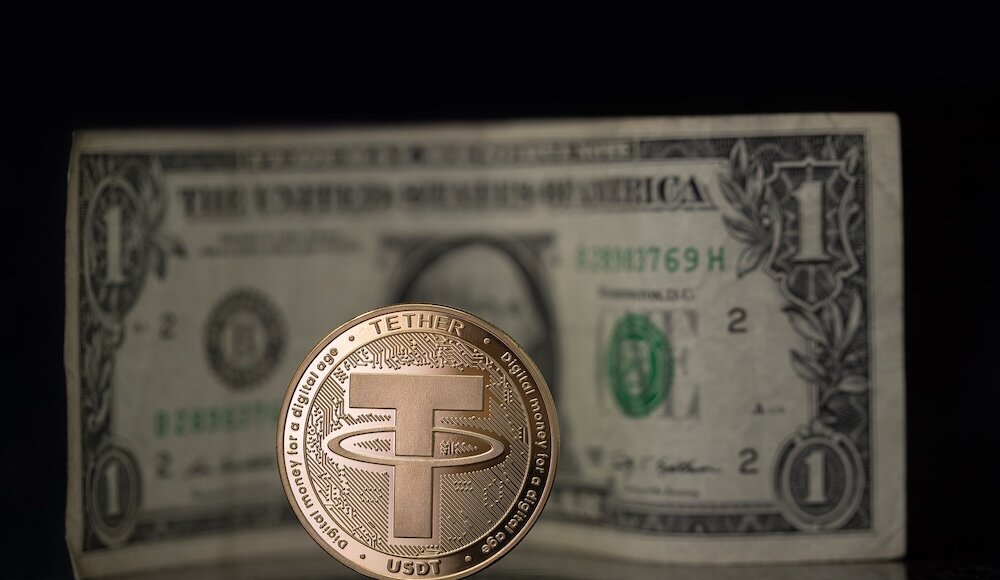
Digital currency like stablecoin is “sexy,” one Alabama banker acknowledges, but if not properly regulated could pose a serious threat to the entire banking industry.
Stablecoins are digital tokens tied one-to-one to the U.S. dollar and linked to the blockchain system. They’re not as well known or nearly as volatile as bitcoins. Tether Limited and Circle Internet Financial are currently the biggest issuers of stablecoin tokens.
“It’s not extremely common. It’s greatly talked about,” says Macke Mauldin, CEO of Sheffield-based Bank Independent. “It’s talked about at everything I go to in banking — every technology discussion we have.”
Bankers in Alabama and elsewhere are concerned that stablecoin deposits might earn interest or rewards that local banks can’t match. Also, if money floods into the digital ecosphere, local bank assets will take a hit, and banks could have a harder time offering loans to the community.
Banking leaders hope that Congress will act to clarify the rules around stablecoins.
“I really believe that a wide-open, unregulated stablecoin in the U.S. banking system is a measured threat to community banks,” says Mauldin.

Left unchecked, it could have a devastating effect on Alabama banks, they fear.
“Research suggests that if rewards-based stablecoin programs were widely adopted, several billion dollars could be withdrawn from bank deposits in Alabama,” Mauldin says in an industry position paper.
“Lawmakers have the chance to close a loophole that allows platforms to present interest-like rewards, even when paid through affiliates,” he continues. “This small but significant change would keep stablecoins limited to payments, reduce confusion that drains community bank deposits and strengthen the foundation of Alabama’s lending system.”
Scott Latham is president and CEO of the Montgomery-based Alabama Bankers Association. The ABA represents 117 banks in Alabama – 90 of which are state-chartered.
“Alabama banks don’t currently hold retail stablecoins as direct customer accounts,” Latham says. “But I wouldn’t be surprised down the road to see that ability come, as fast and furious as that industry is.”
If significant local deposits move to the stablecoin environment, Latham says, “the capacity for the banks to loan money out to you and me or the hardware store or the farmer or the first-time home buyer or whatever begins to shrink.
“Our concern is what happens when those deposits leave with the onset of varied opportunities within technology.”
Some existing legislation has a loophole that allows interest or rewards on stablecoin balances.
“What we’re asking Congress to do is to make sure it closes that loophole,” says Latham.
Last year, Congress passed the bipartisan GENIUS Act that created a regulatory framework for stablecoins and allowed crypto platforms to offer digital-rewards programs similar to airline miles.
The Digital Asset Market Clarity Act, now under consideration, would establish a regulatory framework for cryptocurrencies by spelling out supervision between the SEC and Commodity Futures Trading Commission, as well as create clear rules for companies operating in the digital asset space.
Clarity further classifies digital assets as securities versus commodities and extends yield and reward limitations. It passed the House last year and advanced to the Senate.
Alabama Sen. Katie Britt voted for Clarity in the Senate Banking Committee, saying on X that “digital assets need smart regulation and clear rules of the road to follow.”
“We’re not saying do away with stablecoin,” says ABA’s Latham. “We’re certainly not saying that stablecoin is bad. We’re simply saying preserve the deposit base in banks by not passing a law that will erode it without people even realizing it.”
Mauldin agrees that stablecoins themselves are not the issue and can be useful in international transactions or where speed is vital. They don’t function as deposits and weren’t designed to, he says.
Stablecoin investments simply won’t help fund community loans for houses and small businesses, he explains. They can’t collateralize a loan for a house, restaurant or small business.
Mauldin emphasizes that he embraces technology but understands it has threats as well as benefits.
“Stablecoin is a threat to community banking as it stands now,” he says.
“If you love technology, this is the greatest thing in the world. If you’re responsible for the safety and soundness of a financial institution, it scares me to death,” Mauldin says frankly.
If unsupervised, large companies or banks could even issue their own stablecoins someday, he says.
Significant discounts for purchases by stablecoin, Mauldin says, are already “completely undermining the fabric of one of the greatest economies the world has ever seen that is supported by 4,000 community banks across the United States.”
His position is that local banks should advocate for guardrails and regulation that won’t give one part of the financial industry a big advantage.
“We’ve got to have a level playing field of what a stablecoin is,” he says.
“I think that’s where we need to head instead of all of us trying to create a stablecoin ourselves, just like we did in the 1800s where every bank issued its own currency.”
He compares the buzz around cryptocurrency to the short-lived Dutch tulip frenzy in 1637, where the price of a single rare flower bulb ballooned to as much as $50,000 before crashing.
Cryptocurrencies are “sexy,” he says, but also may hide privacy threats that most people don’t understand.

That’s not to mention the fact that stablecoin deposits aren’t backed by the government.
“Stablecoin is not covered by FDIC insurance, and federal law prohibits them being treated as insured deposits,” says Latham.
Mauldin agrees, “The consumer needs to be wary of putting money into an organization that isn’t insured by the FDIC.”
Latham adds, “Stablecoin folks aren’t about to start loaning you money. They’re not about to start loaning businesses money. They are simply interested in having those dollars on their digital books, if you will, in larger numbers.”
With big money to be made in the crypto world, there is naturally some opposition. Crypto firms are lobbying, too, Latham says.
Mauldin also worries about where stablecoin is headed, whether the right players are in the field and if regulation will apply across the board so that one stablecoin is worth the same in Alabama or California.
A dollar bill is defined and backed by the government, but in theory a “stablecoin on Bemidji Bank – is that really worth a dollar,” he asks hypothetically.
If the Treasury were to issue its own stablecoin, it “really could put this whole debate to rest and say we now have the United States stablecoin.”
“I just want to be sure that our customers understand that it is not defined today,” adds Mauldin.
Mauldin goes to Washington twice a year to meet with lawmakers.
“We need to be sure that we have our views known to those that are making this decision,” he says. “And that’s what we’re doing.”
Deborah Storey is a Huntsville-based freelance contributor to Business Alabama.
This article appears in the July 2026 issue of Business Alabama.