Modern cities are often imperfect creations, hectic and asymmetrical. Laid atop one another, maps of what we consider today the Birmingham Metro region show changes aplenty, but none more so than when the interstate system carved its way through the mountains and valleys. The size and complexity of this system of multi-lane roads and exit ramps leads to a sense of permanence. Yet, there was a Birmingham before the interstates. And one of the buildings lost to that endeavor was the Linger Longer Lodge, which sat high atop Shades Mountain.
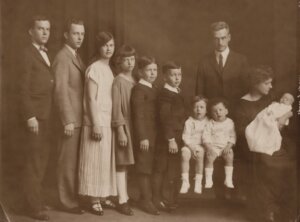
Henry and Helen Beaumont were the energetic couple behind the Lodge. Born in Tennessee in 1878, Henry had previous careers in journalism and advertising. He and Helen were married in Jefferson County in 1903. The couple had what could properly be described as a passel of nine children. The increasing popularity of the automobile helped make their idea for a private social club in the hills above Birmingham a reality.
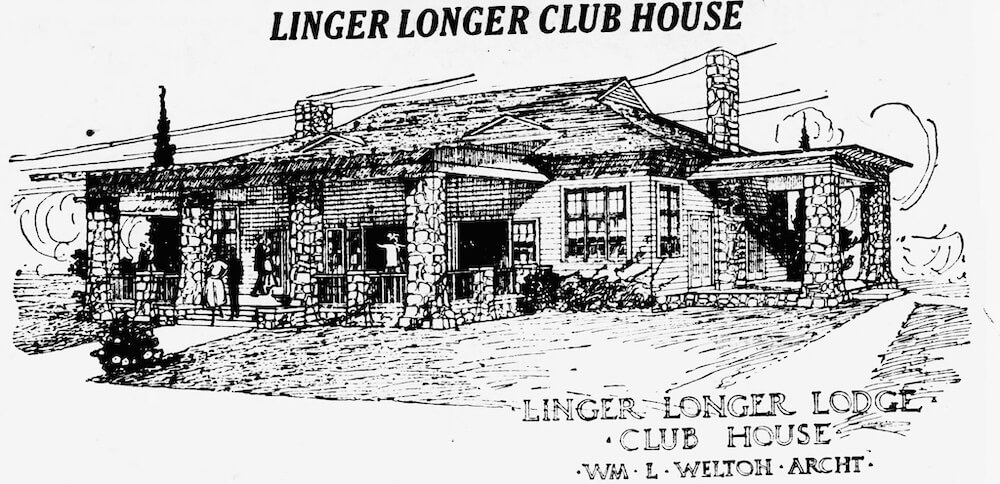
The Lodge organized on April 24, 1920, and incorporated later that year with a capital stock of $12,000. The first official function for members came on the evening of June 1. Japanese lanterns lit the outlines of the garden and framed the lodge and new clubhouse as revelers danced to live music.
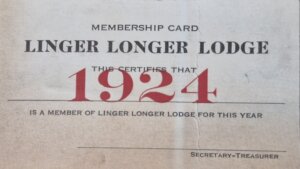
“Linger Longer Lodge will certainly be a success,” proclaimed Birmingham businessman G.B. McCormack, “for it has been started along the right lines.” Within a few weeks, the lodge boasted more than 500 members. The cost of dues was not public knowledge at the time, but a lifetime membership cost a handsome $100 in 1924.
In addition to parties and picnics, the lodge hosted a number of other events in its first year, including a fox hunt and shooting competition. The grounds included a large dance pavilion with electric lights, swimming pool, stocked fishing pond, livery stable, gardens, trails and eventually tennis courts, which hosted popular annual tournaments. By the end of the year, music flowed from the crest of Shades Mountain nightly. The society and culture pages of area newspapers praised the Beaumonts — Henry for his management and Helen for her stylish guiding hand.
During an era of Prohibition, the lodge was known as a reliable place to have a discreet drink. Membership, after all, had it privileges, and those with Linger Longer cards were assured that they could imbibe unhindered. In September 1921, for instance, the club received a letter from a Birmingham city commissioner, himself a member, praising their efforts to create a “complete and adequate place of recreation” and pledging his cooperation “in every possible way in the protection of this splendid enterprise.” Sometimes a wink is as good as a nod.
In the spring of 1926, the lodge briefly hosted a group of decidedly uninvited guests. During a Saturday-evening dance, a group of cars filled with members of the local Ku Klux Klan arrived at the lodge. They encircled the driveway, erected a wooden cross, set it aflame and left. The stated reason for the hooded order’s visit was to protest the fact that, on occasion, the lodge’s Saturday dances stretched into the early hours of Sunday morning. An incensed Henry Beaumont demanded a police investigation, which never came.
The music began to fade in early 1928 when a fire consumed the clubhouse, the beating heart of lodge activities. Workmen began rebuilding the structure almost immediately in hopes of saving the rest of a busy year of planned events. But that day of hoped-for revelry would occur without Henry Beaumont, who died suddenly in mid-April at just 50 years old. Helen Beaumont maintained her position with the lodge she and Henry started together for a few more years. She died in 1959.
The new $10,000 clubhouse opened in July 1929. Just a few short weeks after the opening, however, the lodge was thrust from the society columns to the front page when a 35-year-old patron fell to his death from the porch. The height from which he fell — less than 10 feet — and the severity of his injuries led authorities to suspect foul play. No one was ever charged in the death, and the story eventually faded from the headlines.
Then came the first of several rebranding efforts to rebuild the lodge’s reputation. In an October 27, 1929, announcement, just days after the stock market collapsed, the Shades Crest Country Club promised several improvements, including a new miniature golf course, a novel thing for its time. Try as they might, the officers of the plucky little club could not overcome the concomitant maladies of the previous few years. The lodge fell into involuntary bankruptcy.
A quick succession of owners came and went. Each iteration must have seemed, especially to those who remembered fondly its heyday, a poor copy of the original. One version offered dancing, $1 chicken and steak dinners. Another, the Blue Crystal Nite Club, was raided often by law enforcement for illegal gambling activities and ultimately forced to close. The place where “autoists” once ventured to dance the night away above the city became a place to be avoided. “He went to Linger Longer, but didn’t,” read a pithy critique in a local newspaper.
In the 1940s, as the area filled with homes, the former club was transformed into a private residence. Its best-known owner was Gus Jebeles, the Greek immigrant who founded Dixie Coffee Co. in 1921 and was later briefly an owner of the Birmingham Barons.
There were short-lived commercial uses thereafter, as well, before news came that the state would purchase the property as part of the plan to cut the route for I-65 through the mountain. The wrecking ball came for the lodge in 1968. Asked for comment on the history of the building for a final article, all one former deputy sheriff could muster was “that was a pretty active place.”
When next you should find yourself lingering on I-65 near the Alford Avenue exit, spare a thought for what came before and think of a time when Birmingham seemed a faraway place.
Historian Scotty E. Kirkland is a freelance contributor to Business Alabama. He lives in Wetumpka.
This article appears in the June 2026 issue of Business Alabama.