You’re finally ready for retirement. Cruises booked. Golf club dues paid. Books piled high for discussion. New cookware for gourmet meals. Savings robust.
Six months later you’re sleeping late, missing work friends, eating peanut butter for dinner and feeling a bit lost.
“Most people spend the bulk of their career focusing on the financial elements of retirement, but there’s also a great need of the non-financial, the emotional, the social, the physical — the active parts of retirement that are non-financial,” says Mobile-based financial services advisor Cam Marston.
“Many retired have told me retirement — and this is the exact quote — is not all it’s cracked up to be, and I didn’t know that I was working so hard for this,” he adds.
Marston is co-founder and managing partner of PHASE Into Retirement, a service currently offered on two websites with resources and the proprietary PurposeNext analysis tool that will, they say, “help people prepare for the life side of retirement.”
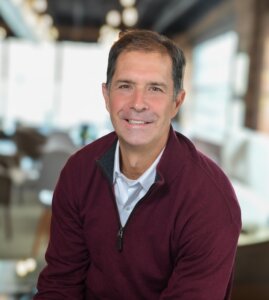
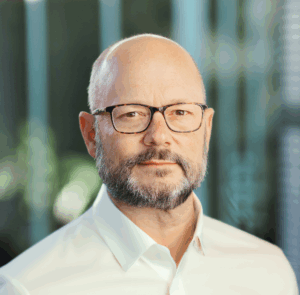
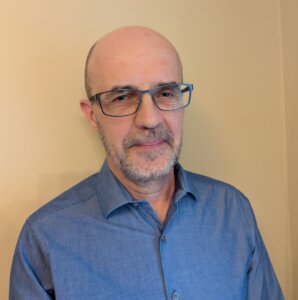
Marston’s resume includes several books such as “The Gen-Savvy Financial Advisor,” the “What’s Working” podcast and columns for CNBC and Business Alabama. His PHASE co-founders are Gerald Bierling, a statistical methodology developer who has taught for almost 30 years at Ontario’s McMaster University; Kai Gray of Fairhope, the CTO who built the PurposeNext platform and has decades of software development experience; and Dr. Taylor Gray of Canada’s University of New Brunswick, who is the company research fellow.
They launched PHASE Into Retirement in the spring of 2025.
“It was a result of a client of mine in financial services saying that there is a need for non-financial retirement readiness assessments,” Marston explains.
The components of PHASE, in brief:
- Purpose — Meaning and identity beyond work.
- Health — Physical, mental, emotional and cognitive well-being.
- Activities — Engagement, curiosity and creativity.
- Social Life — Connection, belonging and friendships.
- Everyday life — Rhythm, stability and structure.
Discussions about retirement planning obviously include Baby Boomers, but also Generation X quickly approaching retirement.
“The way I’ve been helping my clients is helping them understand how to sell their financial services products to these two different generations,” says Marston, who has been advising financial advisers for years.
“We have three markets here — financial advisers who would offer this assessment to their clients, human resources people and human resources offices who would offer this to their internal clients,” he says. “I think the greatest opportunity for us is in financial services.”
HR consultants could suggest it to people who are 18 months or so from retirement. Individuals who want to buy the product directly are a market as well. The survey tool is available online for free while the founders collect feedback.
Kai Gray said the product development process made him think about his own retirement quality of life.
“I’m not just the developer on it, but also an active user of it,” he says.
The initial idea was to offer the tools and research as an ongoing subscription service. Friends and family took the early assessment, liked it and told others.
“That really drove the kind of direct-to-consumer idea. That’s why there’s two websites,” Gray says.
Purposenext.com is geared toward financial services advisers and the corporate benefits market. Phaseintoretirement.com is aimed at individuals.
Participants complete the survey in 10 minutes or so and get a personal assessment through email. Numeric scores identify potential needs in certain areas. Company leaders follow up in a Zoom discussion about specifics.
“Even before you retire, what can you do now to develop, let’s say, the social circles, the social networks, the daily routines and habits, the things that will position you well for when you retire so that Monday morning when you wake up on your first day of retirement, you don’t have to say, ‘What do I need to do now? What can I do?’,” explains Bierling.
Some early users, Gray says, report that “this describes exactly what I’m feeling right now, and I didn’t understand what it was.”
Others got busy making plans for the softer side of retirement like purpose, regular schedules, connections and exercise.
“Hearing that kind of feedback, which quite frankly, I didn’t expect — certainly in these early days where people really took it to heart — I said, ‘Oh, this is needed. This is going to actually really help people,’” Gray says.
Bierling says the product will fill a need because “all of our working lives, both friends, family and also our workplace emphasize financial preparedness for retirement.”
He went to one retirement workshop that focused solely on finances.
“Nobody really prepares you as to what are you going to do when you’re retired,” he says. “We all have these vague ideas that we’re going to travel a lot, but in practicality, how much can people actually travel?”
Golfers, for example, may need other ways to fill their time.
“The other thing that I think people come to appreciate when they do this assessment is that much of your social network and your friends is based around your work,” says Bierling. “You retire and all of a sudden that’s gone.”
The disillusionment some find in retirement is tied to emotional flatness, a loss of confidence, rumination, social withdrawal and a sense of drifting, researchers found.
“What that generally reflects is a lack of purpose upon retirement, a lack of compelling things to do that makes me feel valuable,” says Marston. “What PHASE is intended to do is to solve that problem before retirement happens so that you’ve got three to five years before retirement — heck, eight months.
“We’re going to give you things to think hard about so that when you retire, you will be able to say, ‘Thank goodness I did these things. Thank goodness somebody pointed out to me that this would be what it was like.’”
Solutions may be a network of new friends, volunteering, realistic hobbies, a workout routine or simply a reason to get out of bed.
The assessment won’t dictate specifics like “garden five hours a day with these people,” Marston notes.
It simply identifies areas to work on, be they friendships, loss of activity, people to call for help or gaps in your social life after work ends. New retirees can address those gaps early, he says, so that “you’ve got something to do Monday when you wake up.”
Bierling, who has researched this topic for years, was surprised at how meaningful a person’s social connections are to their well-being.
“When we lose our social network, if it’s primarily based at work, we’re left with a big gap in our lives,” he says.
People think they’ll stay connected to family and friends but often don’t and fall back on scrolling through their phones.
“A lot of us have grown up in that system where your title was very important,” Gray says.
When someone loses a work identity, hobbies usually aren’t much of a conversation starter.
It can be a shock when people realize they have enough money to do what they want, Gray says, but can’t find anything to do.
The founders have talked to a number of financial advisers about getting the program set up to offer clients but aren’t yet selling the service.
Bierling says they don’t expect financial advisors to start giving lifestyle advice, but survey results “definitely can become a conversation starter.”
A corresponding field guide still being expanded allows clients to work through results and list steps for opportunities. It should be available soon on Amazon.
The materials, Marston says, are derived from “our nation’s and Canada’s best research on what makes for a good and happy retirement.
“This is not the three of us putting our heads together,” he says.
Their resources include the Harvard Study of Adult Development, an 80-year longitudinal study on well-being; Boston College Center for Retirement Research, which studies non-financial retirement transitions; and the Canadian Longitudinal Study of Aging, which looks at social participation and life satisfaction.
As the PHASE website declares, “You cannot accidentally create the retirement you want. You must design it — not all at once, but gradually, intentionally and with compassion for yourself as you navigate this significant life transition.”
Deborah Storey is a Huntsville-based freelance contributor to Business Alabama.
This article appears in the June 2026 issue of Business Alabama.