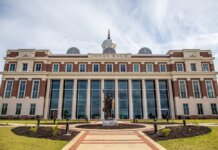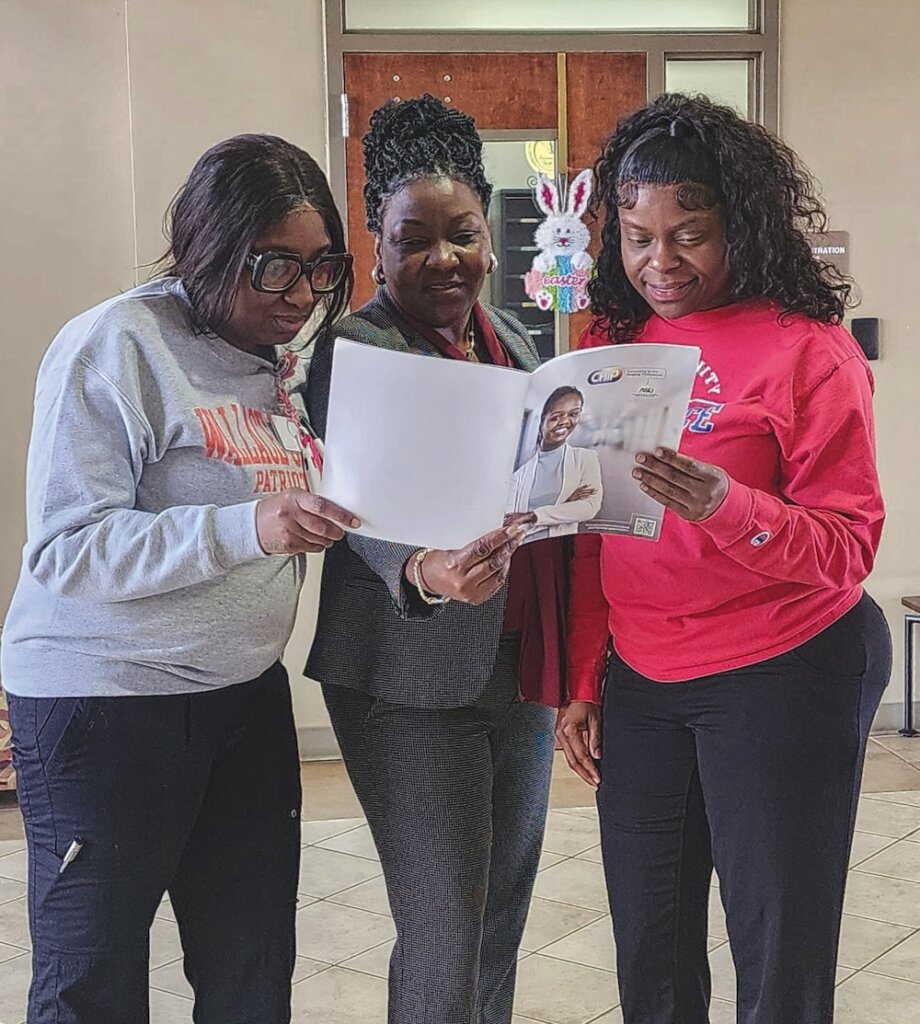
On any given morning, Dr. Donitha Griffin can walk the campus of Wallace Community College Selma, homemade no-sugar caramel frappe in hand, and point to the places where her own journey began. The memories and nostalgia run deeper and thicker than the fertile soil on which the region itself is located; the soil on which her own feet now find themselves every day.
She once sat in those same classrooms as a first-generation college student from Selma, arriving on a music scholarship after faculty visited her high school and invited her to audition. Wallace, she recalls fondly, was “foundational in things that I needed and didn’t even know I needed.”
After earning her associate degree, she transferred to the University of Alabama and completed her bachelor’s degree in social work — graduating ahead of some of her peers because of the credits she carried with her.
Today, she walks those same grounds as president. Sacred grounds. Hallowed grounds.
“I am literally a living testimony,” Griffin says. “The buildings may be different, it may have expanded, but the feel of home and the feel of community is still the same. I’ve sat in these same seats. I know the concerns of the community. And I can say to students, ‘You can do the same.’”
Nearly 200 miles northeast, Alan Smith is shaping a similar message at Gadsden State Community College — though in a very different regional context.
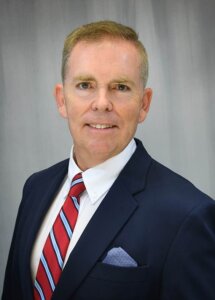
Smith’s connection to the college also is personal. As a young student, he enrolled when, as he puts it, “I didn’t have the confidence I needed.”
Gadsden State provided an affordable option at a time when finances were tight and offered night classes that allowed him to continue his education.
Years later, after careers in K–12 education, construction and light manufacturing — including growing a cabinet shop into a small production business — Smith returned as an adjunct instructor. In 2019, he became dean of workforce development, leading major expansion, including spearheading progress on an advanced manufacturing workforce training center that dramatically reshaped one of the college’s campuses.
“Being in business and industry gave me a different perspective into what our partners need from us as a community college,” he says. “I understood their needs and their frustrations and their wins and losses. That allows me to see things from their side. Having that allowed me to become a better workforce dean.”
Now in his first full year as permanent president, Smith describes himself as “mission driven and purpose driven.” At its core, he says, the college’s mission is simple: “to help people.”
That mission translates into clear career pathways — whether for students pursuing transfer degrees, health sciences, career technical programs or short-term workforce credentials. Smith approaches that work much like the trades he once practiced. Workforce development, in his view, is less guesswork and more like craftsmanship — aligning materials, timelines and talent so that the structure holds. Precision matters. So does listening to the people who will ultimately use what you build.
“We are Gadsden State, a college for the community,” Smith says. “We have something here for everyone — and it’s something at which everyone can be successful.”
Responsiveness to employers is central to that vision. Smith meets regularly with industry leaders, hosts advisory meetings and brings business partners onto campus to ensure programs evolve with market demand.
“I personally visit and interact with hundreds of industry leaders,” he says. “We’re constantly engaging in dialogue to see how we can better serve them.”
For Smith, workforce development is not just about filling positions. “When our college succeeds,” he says, “the communities we serve thrive and grow.”
While Smith emphasizes scale and regional industry alignment, Griffin’s leadership at Wallace is deeply rooted in place.
Serving much of Alabama’s Black Belt — a region long defined in public data by lower educational attainment and a myriad of economic, social and cultural challenges — Griffin speaks openly, unabashedly and proudly about changing the historical patterns.
“We reject the narrative that defines us by the numbers,” she says. “Results matter.”
Her strategy starts early — long before students ever complete a college application.
Wallace is building what Griffin describes as a comprehensive workforce development pipeline that begins with career awareness as early as third grade, reinforced again in sixth and eighth grades. The goal is to help students connect education to tangible career opportunities well before high school graduation.
“Doctors’ kids become doctors. Lawyers’ kids become lawyers,” she says. “But what if you’ve never seen any of that? We have to introduce students to those pathways early.”
In high school, Wallace is expanding partnerships to offer career-focused coursework and short-term credential opportunities — including for students who may not yet meet traditional dual enrollment requirements. Those early successes, Griffin says, build confidence and momentum.
From there, students can move into multiple pathways: short-term, noncredit programs leading to industry-recognized credentials; for-credit career and technical programs aligned with workforce demand; or transfer programs for those seeking advanced degrees.
But Griffin’s background in social work shapes her leadership as much as any workforce initiative.
“I know none of us made it by ourselves,” she says. “We all had help. We all had support. It was the people who saw us and knew that we needed help to be able to move forward.”
Under her leadership, Wallace has expanded support systems designed to remove barriers that often derail first-generation and low-income students. Every student is assigned a coach who monitors progress and intervenes early. The college partners with outside providers to offer 24/7 mental health resources and operates a campus food bank. Griffin also is exploring expanded clothing resources to help students prepare for job interviews.
In some cases, access means bringing the college to the student. Wallace is working with area high schools to offer coursework in local career tech centers, reducing travel distances that can otherwise discourage enrollment.
“We can’t just talk about access and opportunity,” Griffin says. “We have to provide it — and then look at the results.”
Both presidents stress collaboration with business and industry, economic development authorities and chambers of commerce. For Smith, that collaboration ensures programs evolve with employer demand. For Griffin, it is part of serving as a catalyst for transformation across eight counties.
Their leadership styles may differ in tone, but they converge in purpose.
Community colleges, they argue, are no longer simply stepping stones. They are regional engines — institutions capable of strengthening families, stabilizing communities and driving economic growth.
Griffin hopes that years from now, former students will say Wallace “opened the door” to a better quality of life — not just for them, but for the generations that follow.
Smith envisions a college fully integrated into its region’s economic strategy, with thriving enrollment and deep community engagement.
Different campuses. Different regional dynamics. Shared conviction: when education and employment are intentionally aligned, the impact extends far beyond the classroom — and into the future of Alabama’s communities.
Joshua Givens is a Mobile-based freelance contributor to Business Alabama.
This article appears in the April 2026 issue of Business Alabama.