In 2024, Alabama companies exported $26.8 billion in goods and services — the second highest total on record, according to Christina Stimpson, global business officer at the Alabama Department of Commerce. This represents a nearly 30% increase over 2019.
These exports went to 194 countries in 2024, reflecting the diversity of Alabama’s trading relationships, Stimpson says.
It’s not just large companies that are involved in the state’s international trade. An estimated 4,000 companies are exporting in Alabama, with 80% represented by small- and medium-size businesses, Stimpson explains. These firms generated more than 16% of total exports, a sign that international markets are also accessible to smaller businesses, she notes.
Two Alabama companies — one making medical devices and one building large machines for railroad maintenance — are capitalizing on these open doors.
ICONN Orthopedics
ICONN, a medical device manufacturer based in Birmingham, began exporting its products in 2019, says co-founder Whitt Israel. Ironically, the first international customer was in Israel. A sale in Colombia came soon after, and that country is the company’s “most consistent market,” he notes.
Today, ICONN’s international business makes up 40% of its sales, with 60% generated domestically, Israel explains. In addition to Israel and Colombia, the company has exported its products to Guatemala, Panama, Ecuador, Mexico, Puerto Rico, Nicaragua, Iraq, South Africa, Pakistan, Kuwait and Malaysia.
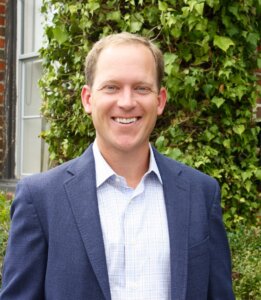
ICONN’s birth, Israel says, was centered on providing good quality orthopedic implants at a lower cost. “My co-founder was a surgeon in Birmingham [the late Dr. Geoffrey Connor] and was frustrated with implant costs and his rotator cuff repair procedures, which led us to start a company to help alleviate those issues,” Israel explains.
The company’s four primary products are suture anchors — screws or nails made of a plastic material called PEEK — for sports medicine procedures, he says. These are used for rotator cuff and labral repairs in shoulder and hip procedures, with 80% going to shoulder repairs. The company also makes anchors for foot and ankle operations, Israel notes.
One of the biggest challenges to exporting its products, Israel explains, is finding good distributors. ICONN’s best distributors contacted the manufacturer after finding its website or hearing about it from others, he says.
“The offensive mode has not been very fruitful as far as trying to proactively find those distributors [on our own].”
These companies run point on getting the devices registered in the respective country, similar to procuring Food and Drug Administration approval in the United States. Their expertise is valuable in knowing the best way to present the documentation to the country’s ministry of health, Israel explains.
The registration and approval process usually runs at a snail’s pace. It took ICONN almost two years to accomplish the registration process in Mexico, Israel says.
Some global regions are just too costly to break into, impacting the markets where ICONN ultimately operates, Israel explains. His company does not have a CE mark on its products, he notes. “[This] eliminates all the European countries, just because it’s so cost prohibitive to get a CE mark,” he says.
“CE marking indicates that a product has been assessed by the manufacturer and deemed to meet EU safety, health and environmental protection requirements. It is required for products manufactured anywhere in the world that are then marketed in the EU,” according to an official website of the European Union.
In addition to global regulatory frameworks and distributors, ICONN’s international success is highly dependent on a country’s development position. “[Countries] need to be developed enough to be doing these [medical] procedures, but they also need to be not so developed and wealthy that they’re not concerned about cost reduction,” Israel explains.
“So, the markets [where] we do well are ones that need good quality products. All of our products are made in America with the latest designs, but [these countries] can’t afford the prices that our competitors charge.”
In the international markets where ICONN operates, customers have to seriously consider costs because they aren’t flush with cash like some U.S. health care entities, Israel explains. “If they can get equivalent quality for a fraction of the price, then they’re going to do that every time.”
As for new markets, ICONN is eyeing Egypt, with registration expected later this year, Israel says. The company also is working on registration in Vietnam, which “is driven by China,” he notes. The ever-evolving tariff situation between China and the United States could “negatively impact” ICONN’s sales prices in Vietnam, he adds, if the registration is a success.
Knox Kershaw Inc.
Montgomery-based Knox Kershaw’s products support the railroads, what Jaky Felix calls the “silent industry that runs behind everything else.” The tracks crisscross our communities, but many don’t realize the vastness of this global industry, notes Felix, the company’s vice president of sales.
The company makes railroad
maintenance-of-way equipment. Ballast regulators are Knox Kershaw’s largest product line and make up most of its exports, although it does export other products, she says.
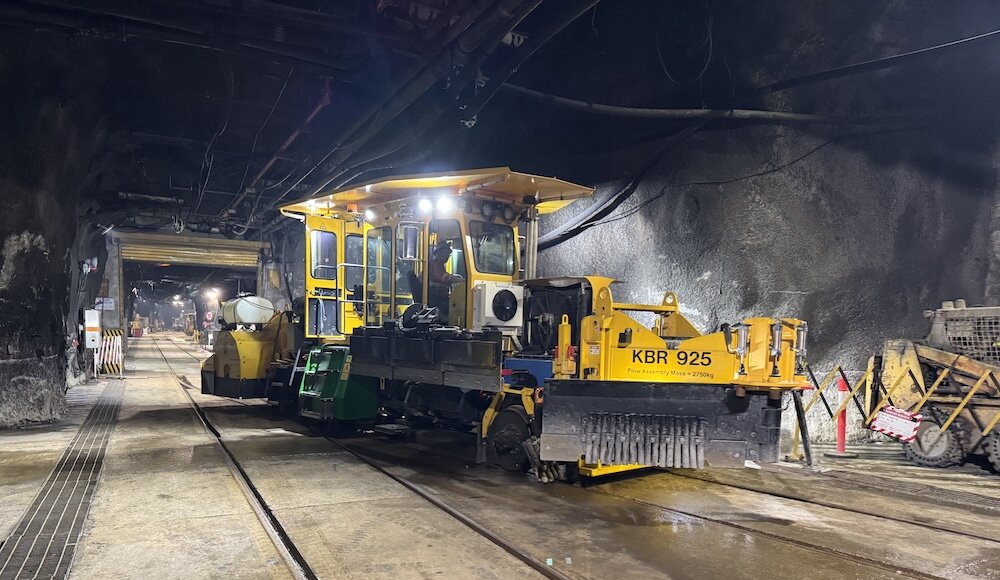
Ballast regulators profile the rock in a railroad track bed, says Felix. The machines pull the rock up and smooth it out so that the tracks are level. A front plow on the machine pushes the rock, and a broom at the rear sweeps the track clear of any excess rock, she explains.
Knox Kershaw does a lot of custom work internationally, Felix says, as tracks outside the United States can be different gauges, meaning various widths between the two rails. The international railways can have a wide gauge or several different versions of narrow gauge.
“We customize machines that will work on those tracks,” she says. For example, the company has built machines for use in Australia and other places that are convertible. “So, they [customers] can convert them from a wide gauge to a narrow gauge or a standard gauge,” making the machines more versatile, Felix explains.
Knox Kershaw’s machines are sometimes used in mining operations to transport coal or other materials from the mine by rail. It recently shipped a custom machine for an Indonesian customer. “We had to design it so that it could be lowered down through a mine shaft and put on the track underneath the ground, and that machine will never come back to the surface again. It will just stay down there and work,” Felix says.
In addition to Australia and Indonesia, Knox Kershaw has exported its products to Canada, Mexico, India, Algeria, Brazil, Argentina, Chile, Panama, Kazakhstan, New Zealand, Malaysia and Thailand, according to Felix.
The company started exporting around 2002, with exports accounting for about 30% of its sales last year, with the same percentage expected for 2025, she adds.
Where does Knox Kershaw want to go next with its exports? Sights are set on South Africa, Felix says.
The company has participated and benefited from a number of global trade missions organized by the state of Alabama, she says. Often with the help of the U.S. Embassy in a given country, targeted meetings are arranged between Alabama companies and identified contacts, from government representatives to potential end users, Felix explains.
“Sometimes it’s not easy to make contacts with people internationally. They don’t take you seriously. To have the embassy standing behind you saying, ‘this person is interested in international trade with you,’ it really opens a lot of doors,” she concludes.
Nancy Randall is a Tuscaloosa-based freelance contributor to Business Alabama.
This article appears in the December 2025 issue of Business Alabama.