When it comes to economic development, most Alabamians see the flash — the politicians’ flip of the first spade of groundbreaking dirt for new construction, the ribbon cutting or the news accounts of dollars invested and jobs created.
They don’t see the grunt work of economic development, the hours, days and even years of work that, if everything falls right, results in those groundbreaking, ribbon-cutting moments.
Griffin Lassiter in Birmingham; David Hooks in Etowah County, who formerly served as director of the Alabama Department of Economic and Community Affairs (ADECA) under Gov. Jim Folsom Jr.; and David Knight in Walker County — three of the state’s most respected economic development professionals — have done the heavy lifting.
Lassiter retired this past summer after serving the city of Birmingham for a quarter century. Hooks serves as executive director of the Gadsden-Etowah County Industrial Development Authority. And Knight, who has worked in economic development for three decades, now serves as executive director of the Walker County Industrial Development Board.
All three have been part of a transformation in their respective communities.
TRANSFORMATION IN WALKER COUNTY
For generations, coal fueled the Walker County economy. But as mines played out and environmental and political pressures increased, a change had to be made.

“It became clear that Walker County would need a plan to diversify its industrial base and create new jobs to backfill those that were being lost,” Knight says.
Enter Mercedes-Benz. Its arrival in Vance may be the most transformative moment in the economic history of the state. Hyundai, Honda, Mazda and Toyota also now have homes in Alabama.
“The announcement by Mercedes-Benz in 1993 that it would locate its first U.S. manufacturing facility in Alabama and the subsequent growth of the automotive sector in the South was transformative for economic development in our region,” Knight says.
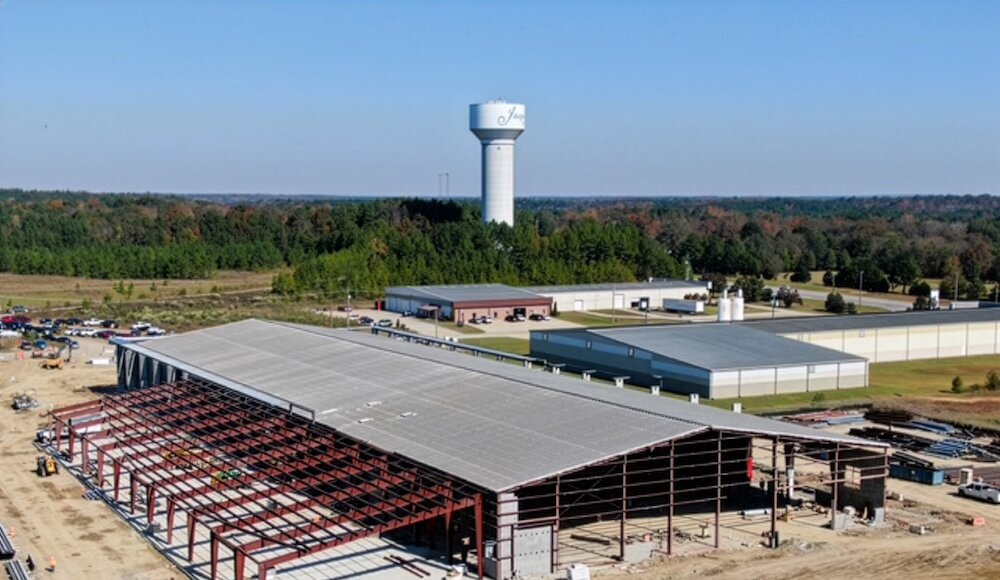
That growth, spurred by the auto industry, sparked a drive in Walker County to develop industrial sites and speculative buildings to attract investment from automotive suppliers.
It worked.
International firms like Yorozu Automotive Alabama, Heiche and HTNA now call Walker County home.
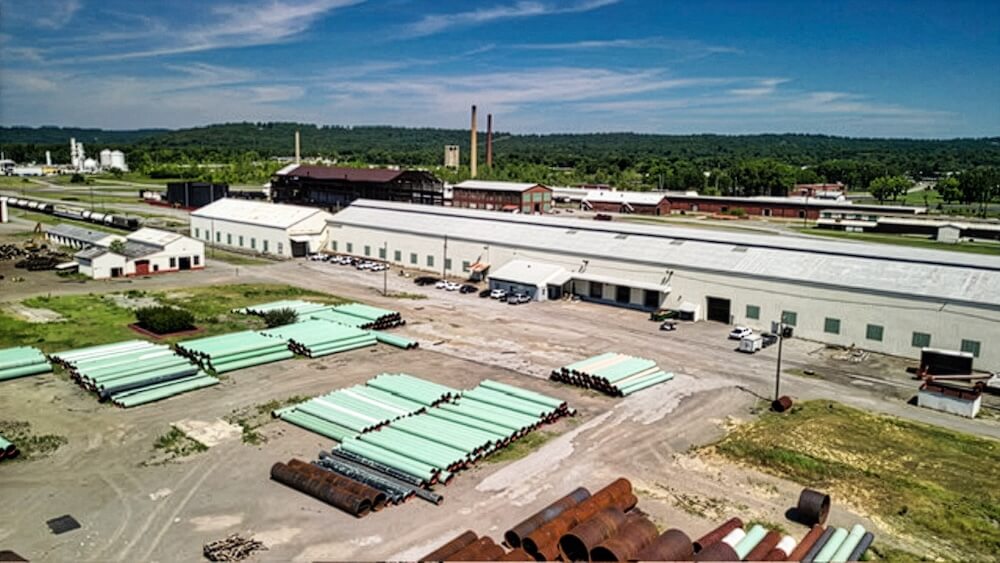
Another boost for the county was the creation of the Heman Drummond Innovation Center in Jasper’s Tom Bevill Industrial Park. The center is named for the founder of Drummond Coal and funded by philanthropic donations from the Drummond family and helps boost workforce readiness.
The county also is home to the new Heritage Industrial Park, built using $4.7 million in tax credits through the Growing Alabama program.
“As we plan and move forward, it’s critical to remember the importance of a diverse economy,” Knight says. “Continued recruitment and growth from the automotive sector is just one facet of our growth strategy.”
Currently, the Walker County Economic Development Authority is working with a variety of industries, including wood products, metal fabrication, defense, technology and transportation.
BRINGING INDUSTRY TO ETOWAH COUNTY
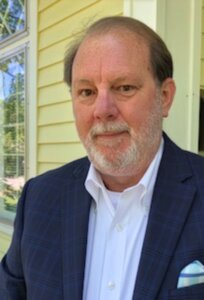
David Hooks was at the helm of ADECA in 1993 when Mercedes announced it was bringing a major assembly plant to Vance. Now, he serves as executive director of the Gadsden-Etowah Industrial Development Authority, a post he’s held for seven years. At 21, he was elected to the city council in his hometown of Attalla, making him the youngest city councilman in America.
“It was obvious to me that economic development was the lifeblood of the community,” Hooks says. “You had to keep going consistently and you always have to keep recruiting because inevitably, you’re going to lose old businesses because they phase out and economies change.”
During Hooks’ tenure in Attalla, the city built its first industrial park that UPS still calls home. In his current role, Hooks is now collaborating with the city on phase two of that industrial park.
Regarding his philosophy of economic development, Hooks draws from his vast experience in real estate, banking, politics and elective and appointed office.
“I look at it in a different light than most people do,” he says. “I think my philosophy of economic development is that invariably you’re going to lose business over time. It’s the nature of economics. It’s a continuous process.”
Persistence pays.
“In most of the big deals I worked on the industrial side [over the past 40 years], some of them take five years to do,” Hooks says. “But I also believe it’s not a one-trick pony. You don’t just do industrial development. You don’t just do economic development. You don’t just do commercial development or tourism. It’s a combination of all those things.”
Just as there has been a resurgence in Gadsden, Hooks has been part of a resurgence in other Etowah communities — Southside, Hokes Bluff, Attalla, Glencoe and others.
“I think the difference is, downtown Gadsden is more visible. Gadsden has always been the hub in that area of the state. And you’ve had Downtown Gadsden Inc. They’re engaged in the process, bringing downtown Gadsden back.”
He adds, “It’s an all-inclusive package you have to put together. My role is more the industrial side, but I work very diligently to coordinate and facilitate everyone in Etowah County.”
25 YEARS HELPING TO BUILD BIRMINGHAM
Griffin Lassiter retired this past summer as senior project manager for Birmingham. In 2000, while working for Alabama Power, Lassiter was asked by the utility’s then-CEO Elmer Harris to help then-Mayor Bernard Kincaid establish an economic development department.

“I wound up staying there and became a full-time city employee in 2009. I thoroughly enjoyed it. We had a lot of success,” Lassiter says.
A big part of that has been growth in the retail sector, he says. Sales tax revenue paves streets, supports schools and funds infrastructure repairs.
“We’ve had a whole lot of success with retail over the years,” Lassiter says. “The challenge that Birmingham faces as opposed to an Auburn or Mobile, I wish we could have a great big, nice industrial park like Auburn does or Brookley Field complex that we could attract aviation suppliers like they do in Mobile. Birmingham’s problem is that we’ve used up almost all of our usable land. Our industrial parks are full.”
Much of the open land in Birmingham is above old underground coal mines. That means expensive site preparation.
Lassiter was drawn to economic development for a simple reason: “Helping people get jobs,” he says.
“I’ve told people a lot of times — and this may seem silly — but one way you can measure the success of economic development is the number of bicycles and dolls under Christmas trees. That means folks have jobs and they’re able to provide for their children and their families.”
For Lassiter, whose father owned a Montgomery hardware store and whose mother sold real estate, economic development is personal.
“I want people to have a wonderful life,” he says. “Having a good job is the key to having a good life and providing for your family.”
On his last day of work for the Magic City, Lassiter laid out his philosophy of economic development to the city council. Echoing Hooks and Knight, Lassiter believes economic development is a team effort.
“It truly takes a village. You can’t do it by yourself. I never worked a project that I didn’t have help from the Finance Department when I was trying to negotiate incentives, or the Legal Department when we were negotiating contracts, or the engineering folks that helped us with sites. There were just tons of people involved.”
He adds, “If you try to do economic development as a lone wolf or by yourself, you’re going to fail.”
Paul South is an Auburn-based freelance contributor to Business Alabama.
This article appears in the December 2025 issue of Business Alabama.