This isn’t a story about the Crimson Tide’s success on the gridiron.
Gasp!
Take a breath, Tide fans.
While football is synonymous with the University of Alabama, it is only one part of a vast institution. The flagship, based in Tuscaloosa, is the largest university in the state by enrollment. Fall 2026 enrollment totaled 42,431, an increase of 71 students over the fall 2025 total, according to a September UA post.
To maintain that stature, the university is introducing two new schools, new degrees and courses, plus a new Student Well-Being Hub. In addition, an office of Enrollment Management was created in November 2025 to help keep retention rates high.
These changes are largely driven by UA President Peter Mohler’s vision of future growth, says Jim Landers, assistant vice president for enrollment management. “We’re being very intentional and purposeful as far as how we recruit, admit and then enroll students,” Landers says.
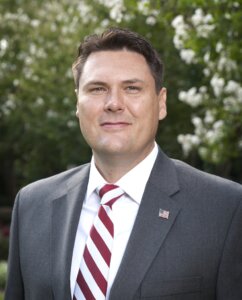
Enrollment Management is led by Matt McLendon, who is responsible for undergraduate enrollment. That includes overseeing the Capstone Center for Student Success, which plays a large part in retaining students.
UA’s retention rate is currently at 88%, Landers notes. Retention rates reflect the percentage of first-time undergraduate students who return to UA the following fall. The rates are generally an important marker of success for colleges and universities.
The Capstone Center is focused on helping and retaining students throughout their university experience. “[That] area on campus is truly dedicated to student support. If students have struggles while they’re here on campus, they can go there and find tutoring, counseling, the writing center, all the different things that they need to be successful,” Landers explains.
The Capstone Center is a large collector of data, says Emily Woodroof, who handles in-state and transfer recruitment for UA. This data helps staff to monitor barriers that could prevent students’ success.
On a recent September weekend, for instance, staff members called some students, concerned that they weren’t attending their classes. “[The reasons] could be something small or something big. It’s going back to being intentional and picking up the phone,” Woodroof notes.
While the Capstone Center is about students’ academic needs, the new Student Well-Being Hub will support their social and emotional needs, Landers says. The hub is set to open in January 2027 and is one way that UA is adapting to changing student needs, he adds.
The hub is expected to offer services like counseling, intervention and recovery, along with health and wellness, all with an eye toward students’ well-being.
On the academic front, UA is adding two new schools and various degrees while modifying others. The changes are geared to meeting students’ changing interests and the future needs of industry. “Our president is phasing in new things and phasing out [other] things that may not be relevant to this generation,” Landers explains.
In fall 2027, the School of Leadership and Policy will launch to align with UA’s “mission to develop leaders, strengthen communities and expand its global impact,” according to UA. Parker H. Wright is the inaugural dean of the school. He will lead programs connecting public service, policy and leadership development.
The new School of Data Science is also set to open in 2027. According to UA, Data Science will be the “first academic unit of its kind in the state of Alabama focused on artificial intelligence and one of the first dedicated data science schools in the southern United States.” The school will include undergraduate, master’s and doctoral programs that blend tech know-how with ethical, social and economic considerations.
The new school parallels today’s technological changes and needs. For example, UA is seeing some decline in computer science students while experiencing growth in AI-related programs, Landers notes.
Also reflecting current society, the College of Communication & Information Sciences has introduced a new degree in informatics. It will focus more on the human side of social media and influencers vs. only algorithms, Woodroof says.
“Students today have really vast interests and are looking for ways to change the world, which is awesome,” Woodroof says. “These kids are savvy. They’re coming in with lots of dual enrollment credit and AP [Advanced Placement] credit, tailoring their degrees and utilizing their scholarships,” she adds.
To offer flexibility to students with multiple interests, UA’s New College guides them to an individualized degree that may cross over two to three different colleges, Woodroof explains.
Recruiting in-state students
UA’s fall 2026 enrollment included 18,652 Alabama residents, an increase of 3.6% from the year before, according to UA reports. “We pride ourselves on making [UA] attainable for the students here in the state of Alabama,” Landers says, recognizing that they will help meet the state’s future workforce needs. Typically, he notes, UA has at least one student enrolled from every Alabama county.
In the 2027 edition of Best Colleges by U.S. News & World Report, UA ranked No. 73 in Best Value for In-State Students.
One of those students is Reggie Clifton of Alexander City. He is working toward a master’s degree in tax accounting, with a completion date set for May 2027. His ultimate goal — landing a job with a public accounting firm.
Clifton went to UA as a transfer student from Central Alabama Community College in Alexander City. Once he finished his two years at CACC, he applied to various schools to continue his education.
“Alabama rose to the top of the pile because of the different scholarships that they had for transfer students, and that’s what won me over. I soon declared I was going to Alabama, and I was able to get a full ride with a transfer scholarship,” Clifton explains.
He completed his bachelor’s degree at UA in May 2026.
Clifton has taken advantage of UA’s leadership organizations, another factor that he says drew him there. Through involvement with the Culverhouse Ambassadors, he’s given facility tours of the business school. He’s met donors and alumni through these interactions. “[These experiences] have really helped me get connected and figure out what I want to do career-wise,” Clifton says.
In summer 2026, he interned in Washington, D.C., via the Capitol Scholars Program. The program is open to top UA System students interested in careers related to the federal government, according to UA.
Through stints with some of the Alabama congressional delegation — U.S. Rep. Mike Rogers (3rd District) and U.S. Sen. Katie Britt — Clifton visited the White House and got exposure to policy groups, think tanks and lobbying firms, he notes.

Like Clifton, Jace White of Montgomery has taken advantage of UA’s options. A junior studying sports media in the College of Communication & Information Sciences — C&IS — White chose UA after attending a summer camp there while still in high school. Camp attendees participated in a promotional campaign to build freshmen’s awareness of hypothetical sports teams.
“I saw the opportunities that we had within the C&IS and the opportunity to work with the SEC Network as a sports media student,” White says. “That was pretty huge for me. It was unlike [anything] I had seen at any other college tour or visit.”
Those opportunities have become reality for White. He landed an eight-week summer internship with Fox Sports to help cover the FIFA World Cup in Los Angeles. That led to a contract extension as a Fox Sports freelancer for four Atlanta Falcons games. In that role, White works as a runner assisting reporters with various broadcast needs.
He credits C&IS faculty and staff who focus on “outside of the classroom” opportunities for students. White is an executive member of Industry Immersion, one such program where communications students take field trips to major U.S. cities. They talk with potential employers, from PR firms and news stations to sports teams and ad agencies, he explains.
“[These field trips] are why a lot of students get internships. It was the reason I was placed in front of Fox Sports,” White says.
Of all the gigs he’s had, one particularly stands out: being selected this year as one of two hosts for the Barkley Pre-Game and Halftime Report. “It’s one that I’m the most proud of because it’s very hard to accomplish it,” White notes.
During the program, sponsored by Barkley GMC in Tuscaloosa, White and his fellow host update fans on various college football games in progress across the United States. The pair appears on the Jumbotron at every home football game in Bryant-Denny Stadium.
“It’s great for experience and great for the portfolio as well,” White says.
Nancy Randall and Vasha Hunt are freelance contributors to Business Alabama. She is based in Tuscaloosa and he in Birmingham.
This article appears in the November 2026 issue of Business Alabama.