Daniel Poole says he has never seen anyone leave a rodeo sad.
“We still fly the American flag,” says Poole, head coach of the men’s and women’s rodeo teams at the University of West Alabama. “We do the Pledge of Allegiance. We pray.”
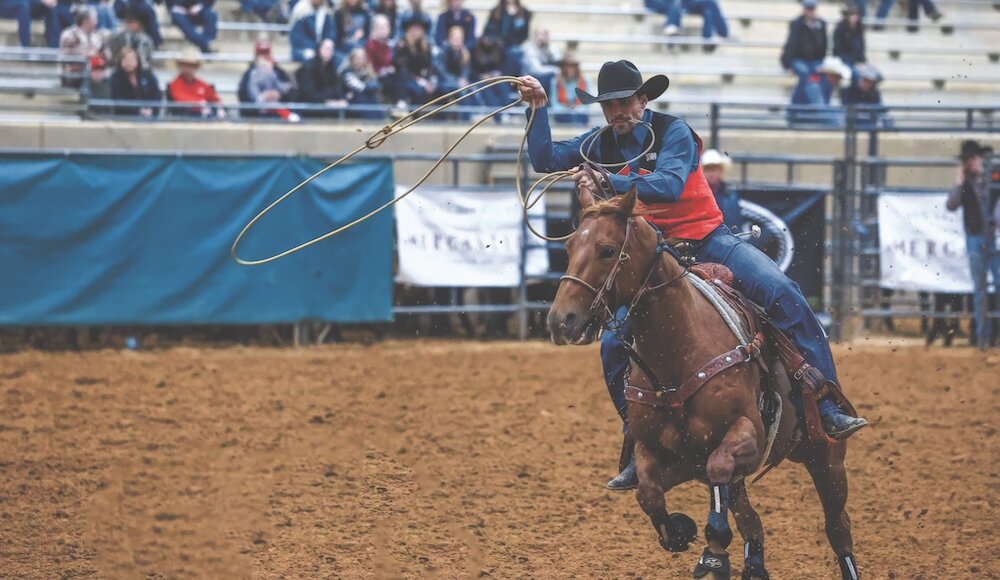
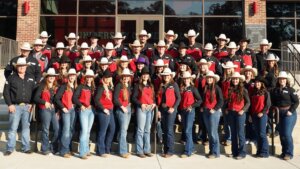
Rodeo has become a way of life in the small town of Livingston, with men and women barely into their 20s doing everything from riding bulls to roping steers.
“It’s a unique opportunity that UWA has that many never get to see,” says Brett Gilliland, athletics director at UWA. “It opens it up to a whole new world of athletes.”
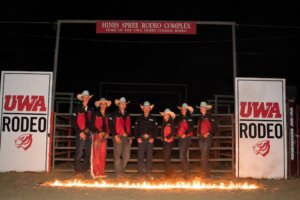
UWA’s first rodeo team formed in 1995 under then-President Don C. Hines. Over the years, the team has grown from about 22 wranglers to nearly 40, all men and women on scholarship. And the sport has brought home two of UWA’s three national championships.
Poole competed in rodeo at UWA from 2006 to 2009 before moving to Wyoming, where he led horseback fishing and hiking trips. In 2015, he returned to Alabama and the rodeo team as an assistant coach under coach Chad Phipps, taking over the program in 2019. With Poole at the reins, the women’s rodeo team won back-to-back national championships in 2023 and 2024. The only other national championship UWA has is for its football team, which won the NAIA National Championship in 1971.
UWA’s location is a great opportunity to attract some of the best wranglers in the country, says Poole.
“We’re almost dead in the center of the Southeast, so we can pull kids from all over and they don’t have to travel more than three to six hours from home,” Poole says.
Poole credits the cultural phenomenon of “Yellowstone,” a television show featuring cowboys and ranch hands in Montana, as a major factor in rodeo’s surge in popularity in recent years.
“It kind of revitalized the Western culture and the wholesomeness of rodeo,” he says.
Stone Reeves, a sophomore wrangler on the team, began competing in rodeos by the time he was 11 in Magnolia, Mississippi, and was recruited by Poole during the national high school rodeo finals in Rock Springs, Wyoming, back in 2022.
Up until then, Reeves had been offered scholarships by schools like Northeast Texas Community College and Southern Arkansas University, but felt UWA was a program better suited to his own ambitions.
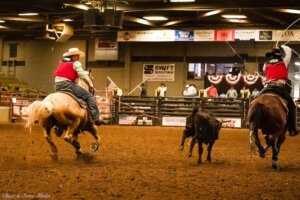
“I could tell just talking to Daniel, he only cares about winning,” Reeves says. “That competitive nature, which is also in me, is what drew me to UWA.”
Reeves says that going from a solo act to being part of a team was something of an adjustment for him, but that he now appreciates how special the bond is on the team.
“Ever since I started roping, I either won or lost by myself,” he says. “There’s definitely more of a pressure when you’re competing for the team, but nobody stays mad at you if you mess up. We have a pretty good bond, and we always help one another out.”
Morgan Ward, a sophomore on the team, started “roping” when she was 12. For her, getting to be part of the rodeo team is like being part of a family.
“We see a lot of college rodeo teams and I feel a lot of them are not as close as us,” Ward says. “We’re going to be down there and supporting our teammates.”
Back in June, Reeves and the team were in Casper, Wyoming, for the 2026 College National Finals Rodeo. By the end, Reeves and fellow teammate Bryson Crawford ended up seventh in the country for team tying, while Ivy Bone won the Reserve National Championship in breakaway roping, the first UWA athlete to win the title since Taycie Matthews in 2024.
Being one of the crown jewels of UWA’s athletics department, the rodeo team gets a lot of attention at the school. In fact, Gilliland and UWA President Todd Fritch made it a point to attend the championship in Casper to support the program.
“In Casper, it was really cool walking and seeing what UWA means within the rodeo community here,” Gilliland says.
Gilliland, who coached UWA’s football program for a decade before becoming athletics director, says the rodeo team has been a real blessing for UWA and that the school is always looking for new ways to help the team grow and feel supported.
“It definitely drives the brand of UWA and athletics to areas that other sports may not do or be unable to do,” he says.
Like other sports and athletes supported through name, image and likeness (NIL) deals, the rodeo team has sponsors, the most notable being Campora Development, a real estate company owned by Steve and Gayle Campora in Livingston. The Camporas have been involved with many aspects of fundraising for UWA athletics, starting with their daughter, Kayla, who was a graduate assistant for the women’s basketball team.
“My wife and I want to spend as much time around younger kids as we can,” Steve Campora says.
The Camporas got involved with the rodeo team after Poole reached out to them regarding help sponsoring a junior rodeo for younger kids in the area. Originally, the couple were familiar with the team through Blair Bullock, a basketball star who was also on the rodeo team. The Camporas slowly began getting involved with the program after Bullock’s death in 2022, when they decided to sponsor a rodeo scholarship in her name.
Campora says the more he and his wife got to know the wranglers, the more they came to love the sport, which they felt was rooted in a sense of both family and tradition.
“Rodeo is different than other sports,” he says. “You go and they start with a prayer.”
Today, Campora Development sponsors several team members and helps fund UWA’s annual home rodeo in the fall. They have also donated money toward equipment and space for the team to practice.
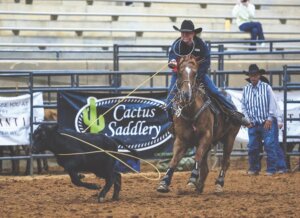
So far, it seems the Camporas’ investment has been paying off.
“They’ve established a culture of good kids who are good at their events,” Campora says.
Gilliland says the athletics department has been working on ways to promote the team, especially on social media, where they have more than 10,000 followers on their Facebook page and nearly 2,000 followers on Instagram. Currently, Gilliland and university administrators are looking to gauge the influence of the sport on UWA, from enrollment to local economic impact.
“It’s definitely something we’re expanding to the university, and it’s being led from the top,” he says. “It’s something Dr. Fritch believes in and wants to support for our athletics.”
Poole says that while some members of the team try their hand at professional rodeo once they leave UWA, others go into other fields, such as communications and social media, both rooted in the modern ways that wranglers now promote themselves in the sport.
“We’ve had a couple of them who run our social media account, and it also helps them to have that on their resumes,” Poole says.
Ruling out a professional rodeo career, Ward says she would like to use her eventual degree in marketing to help others highlight charity horses — equine welfare organizations, rescues and sanctuaries that rehabilitate and rehome horses — as well as the sport in general.
“It’s not as publicized as football,” she says. “I think it should be more popular.”
Meanwhile, wranglers like Reeves are hoping to move on to the next step by becoming professional rodeo riders themselves, something he feels his time at UWA is setting himself up for.
“I’m just trying to do everything the right way,” Reeves says.
Regardless of what the men and women do outside the rodeo, Poole believes what they learn within the arena will follow them the rest of their lives.
“You’ll have easy days and hard days, but if you’re disciplined and stick with it, the confidence it will breed can be life-changing,” he says.
Drew Taylor is a Birmingham-based freelance contributor to Business Alabama.
This article appears in the November 2026 issue of Business Alabama.