Tammy Cohen built a company. And then that company helped rebuild a city.
In 1996, Cohen started a solo architecture and design firm out of a small office on Second Avenue North in downtown Birmingham. Within a few years, she was joined by Richard Carnaggio and Karen Reynolds. Taking the first letter from each last name, the firm became known as CCR Architecture & Interiors.
From the beginning, Cohen says one of CCR’s goals was “to do as much as we could for our city.” So, over the ensuing three decades, the firm has repeatedly worked on projects that have helped spur development in adjacent areas.
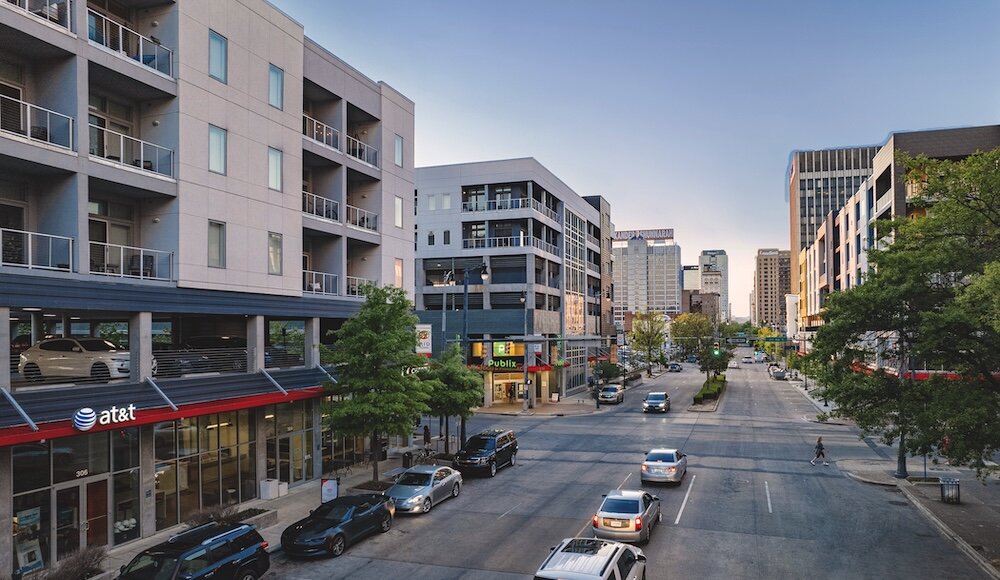
The first of these undertakings occurred just outside CCR’s original office. At the time, Second Avenue North had become a bit of a deserted area between the main downtown business district and the University of Alabama at Birmingham campus. So CCR began working with Operation New Birmingham (now REV Birmingham) to renovate several historic structures.

Before long, those renovated buildings became home to local businesses, restaurants and loft apartments. Today, Second Avenue North is one of Birmingham’s busier areas, attracting day and nighttime foot traffic that simply did not exist along that street in the late 1990s.
“That’s what got us going,” Cohen says. “We started placing an emphasis on infilling vacant properties in urban settings.”
Since then, CCR has helped several other areas perform similar transformations. These include the YWCA’s Woodlawn neighborhood revitalization effort of 34 housing units, the 20 Midtown project on Third Avenue South (which included the introduction of a major grocery store into downtown Birmingham), and SoHo Square in Homewood, a mixed-use development with housing, retail and a new location for Homewood City Hall.
“Sometimes I’ll look at a map and think, ‘We worked on that. And that.’ Then you start linking the dots,” Cohen says. “It’s so exciting to see the impact of how one little corner can radiate out. It’s slow growth, but very impactful, and it’s rewarding to see that come together.”
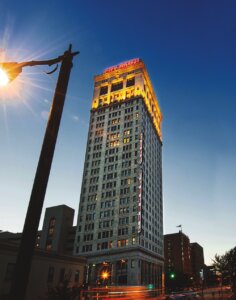
In 2005, the firm moved from downtown to its current location off First Avenue South near the renovated Pepper Place complex (where the weekly Farmers Market is held), and the area improvements continued.
CCR worked on the creation of Lakeview Green, a five-story, 150,000-square-foot mixed-use development bridging the gap between Pepper Place and the Lakeview entertainment district. More recently, the firm helped with the design of the new Lakeview Marina development that includes both businesses and a small outdoor music venue.
Once again, an area that had been largely deserted has undergone a remarkable revitalization. Cohen can see this firsthand from CCR’s offices, as the new 2-mile-long, paved Hugh Kaul Trail passes by across the street and is regularly filled with walkers, runners and cyclists.
“These kinds of people-centric, community projects really get us going,” Cohen says. “It feels good to watch how it affects an area, to see it slowly evolve to where there are always people out walking around and enjoying things.”
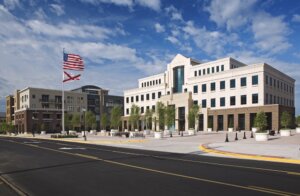
While CCR has grown over the years to now include 20 employees, it remains basically a boutique firm. As a result, the firm primarily obtains projects on an individual basis, according to Jacklyn Loquidis-Hamric, vice president and interior designer.
“As we’ve gotten bigger, each partner has their own area that they bring to the table,” Loquidis-Hamric says. “So, we don’t have any one focus of what we do. We kind of do everything. We build and work in 20 different sectors.”
CCR’s latest project might be its most meaningful. The firm handled the design of the new 16th Street Baptist Church Education and Visitors Center, located adjacent to the famed Civil Rights site where four young girls were killed in a Ku Klux Klan bombing in 1963.
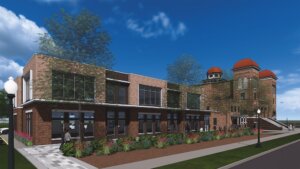
Because of the significance of the church in the Civil Rights movement, it attracts visitors from throughout the world. But it remains an active church and is not truly set up to be a tourist destination. That will change with the opening this summer of the 13,000-square-foot visitors center, according to CCR Vice President and Architect Roman Gary.
“Right now, they can only handle one tour group at a time, so people just have to wait outside,” Gary says. “They have no place to eat, and no place to sit and reflect after the tour. With this building, they can have multiple tour groups at one time. They can feed them and have space for meetings and events.”
Gary says one of the biggest challenges of designing the new structure was coming up with a look that paid tribute to the history of the site while still providing modern conveniences.
“We wanted to keep the emphasis on the original church and have the new building fit into the grand scheme of what happened there,” Gary says. “You have to hit the in-between where it’s not too modern, but it can’t be completely historic. We tried to find that middle ground, the sweet spot of the new and the old mixed.”
With that in mind, the exterior of the visitors center has the appearance of being three structures, which Gary says is meant to replicate three small houses that used to sit on the site. Meanwhile, the interior lobby flooring consists of a series of contrasting colors designed to be a metaphor of the bombing’s impact.
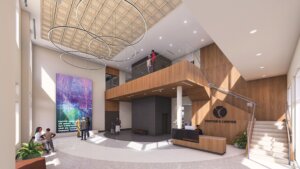
“The idea of the flooring is that the aftershocks of the bombing reverberated throughout the United States,” Gary says. “So, it starts with an intense color and ripples out to the edges.”
Coming up with a design for the center was made even more difficult by the layers of approval that were needed. Not only has the 16th Street Baptist Church been nominated as a UNESCO World Heritage Site, but it also has status as a U.S. National Park Service monument, and is on the list of the Alabama Register of Landmarks and Heritage. In addition, the plans had to be approved by the Birmingham Design Review Committee, as well as the church members.
In the end, however, CCR officials say all the effort was worth it, considering the importance of the 16th Street Baptist Church to Birmingham’s history.
“This is my favorite project I’ve ever worked on,” Loquidis-Hamric says. “It’s a pride project. Proud that this church is still functioning, and proud that Birmingham fought back and was part of that movement.”
Cary Estes is a Birmingham-based freelance contributor to Business Alabama.
This article appears in the June 2026 issue of Business Alabama.