For decades, most investors have followed the same familiar playbook: diversify between stocks and bonds, stay invested for the long term and trust that markets will eventually deliver steady growth. If we’ve heard it once, we’ve heard it a thousand times. It’s the financial investment equivalent of “Just hang in there and hope for the best.”
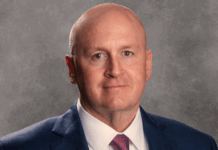
That approach — often referred to as the “60/40 portfolio,” with 60% in equities and 40% in bonds — has guided financial planning for much of the past 40 years. But according to Birmingham-based wealth manager Michael Mullis, of Kelley & Mullis Wealth Management Inc., the conditions that made that strategy effective may no longer exist.
“What made the 60-40 work so well for the last 40 to 50 years were the tailwinds that were behind it,” Mullis says. “If those tailwinds are reversing, how do we make changes?”
A Playbook Built on Tailwinds
Mullis points to the period from roughly 1980 to 2022 as a uniquely favorable era for traditional investing strategies. During that time, investors benefited from a combination of falling interest rates, low inflation, globalization and abundant, inexpensive energy.
Falling interest rates, in particular, provided a powerful boost to both stocks and bonds. As rates declined, bond prices rose, while lower borrowing costs supported corporate growth and higher equity valuations.
“Falling interest rates make the value of bonds go up. They also raise the value of equities,” Mullis says. “Lower rates…there’s more growth. So those falling rates are a huge tailwind.”
At the same time, inflation remained relatively subdued for decades, allowing investment returns to outpace rising costs.
“We had a low inflationary environment that really didn’t end until 2022,” he says.
Globalization also helped keep costs down by expanding access to cheaper labor and production. The result was a long period of steady growth that reinforced confidence in traditional portfolio models.
“For a long stretch, if you just owned something, it was going up,” Mullis says. “It didn’t matter if it was your house or your car or your 401(k).”
A Different Economic Reality
In recent years, however, several of those tailwinds have begun to shift.
“We had a moment in 2022 where we woke up and said, ‘Wait. We just printed trillions of dollars and inflation is here,’” Mullis says.
Inflation surged following the COVID-19 pandemic, while interest rates rose sharply after a long period near historic lows. At the same time, globalization has begun to reverse in some areas, with companies re-shoring production — often at higher cost.
“Today it’s about re-shoring — bringing jobs back to America,” he says. “So that globalization trend is definitely changing.”
These shifts have raised questions about whether traditional diversification strategies will continue to perform as expected. In some recent environments, stocks and bonds have moved in the same direction, reducing the benefits of holding both.
“The landscape is definitely changing,” Mullis says. “When the environment changes, we have to look at how we build portfolios.”
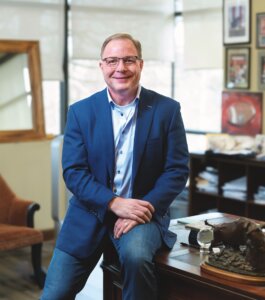
Kelley & Mullis Wealth Management Inc. Photo by Art Meripol.
The Growing Importance of Purchasing Power
One of Mullis’ primary concerns is what he refers to as “purchasing power risk” — the possibility that inflation erodes the real value of wealth over time.
“It is that idea of a fixed income of a thousand dollars being sufficient, and then two years later that fixed income is no longer sufficient because it doesn’t buy the necessities,” he says.
That risk has become more visible as higher prices for housing, food and everyday expenses have put pressure on household budgets — even for those with growing investment accounts.
“For 100 years, Americans have had this benefit of the U.S. dollar as the world’s reserve currency,” Mullis says. “We are taught to save in dollars…earn four percent and we come out ahead. Well, I am questioning that.”
He points to recent declines in the dollar’s purchasing power and shifting behavior among global central banks as reasons for concern.
“It doesn’t mean the dollar’s going away,” he says. “But it is for sure devaluing.”
Looking Beyond Traditional Assets
In response, Mullis and his team have begun incorporating a broader range of assets into client portfolios, particularly those tied more directly to the physical economy.
“We decided that a core asset for us needed to be gold,” he says. “Gold has been a store of value for 4,000 years.”
Rather than treating it as a speculative investment, Mullis describes gold as a stabilizing component designed to help preserve value over time.
“It’s not that we expect gold to double or triple,” he says. “But it is going to protect… it’s a store of wealth.”
Other materials, including silver and copper, also are drawing increased attention due to their role in emerging technologies and infrastructure.
“We’re looking for the inputs and the bottlenecks that have to happen,” Mullis says. “Silver has to be used. Copper has to be used. And we have to have massive growth of power.”
Technology, Energy and the Future of Investing
Much of that thinking is tied to the rapid development of artificial intelligence and the infrastructure required to support it.
“I feel like AI is changing everything,” Mullis says. “But all of that requires power.”
As demand for computing power increases, so does the need for energy, materials and infrastructure — factors that are influencing how some investors are positioning their portfolios.
“We’ve stepped back and said in this technology phase we want to own the inputs — the metals, the power — instead of trying to solve what company is going to win,” he says.
That shift also is changing how traditionally stable sectors are viewed.
“We’re seeing power companies that are growing faster than tech companies,” Mullis says. “And I don’t think that trend is going to slow.”
Staying Disciplined in an Uncertain Environment
Despite the shifting landscape, Mullis emphasizes that discipline remains essential.
“You’ve got to lean into your thesis,” he says. “You can’t let one day change your thesis.”
That can be difficult in periods of volatility, when markets may react unpredictably — even in ways that seem to contradict underlying economic trends.
“Did something change in my thesis last night while I was asleep?” Mullis says. “Or is this just the market moving?”
A Time to Reevaluate
For investors, Mullis believes the current environment presents an opportunity to reassess long-held assumptions.
“One of the biggest mistakes I see is people just staying on autopilot,” he says.
Instead, he encourages a more deliberate approach — one that includes greater awareness of how different assets perform under changing economic conditions.
“All of my wealth should not be in dollars in passive investments,” Mullis says. “There needs to be a portion set aside in store-of-value assets.”
Ultimately, he says, the goal is not to have a crystal ball, but to build resilience.
“The goal isn’t predicting the future. It’s building a portfolio that remains durable even if the economic regime changes.”
Josh Givens and Art Meripol are freelance contributors to Business Alabama. Givens is based in Mobile and Meripol in Birmingham.
This article appears in the May 2026 issue of Business Alabama.