How does a family-owned company stay in business for 80 years? For Conn Equipment Rental in Sylacauga, it’s by being willing to do the heavy lifting, in more ways than one.
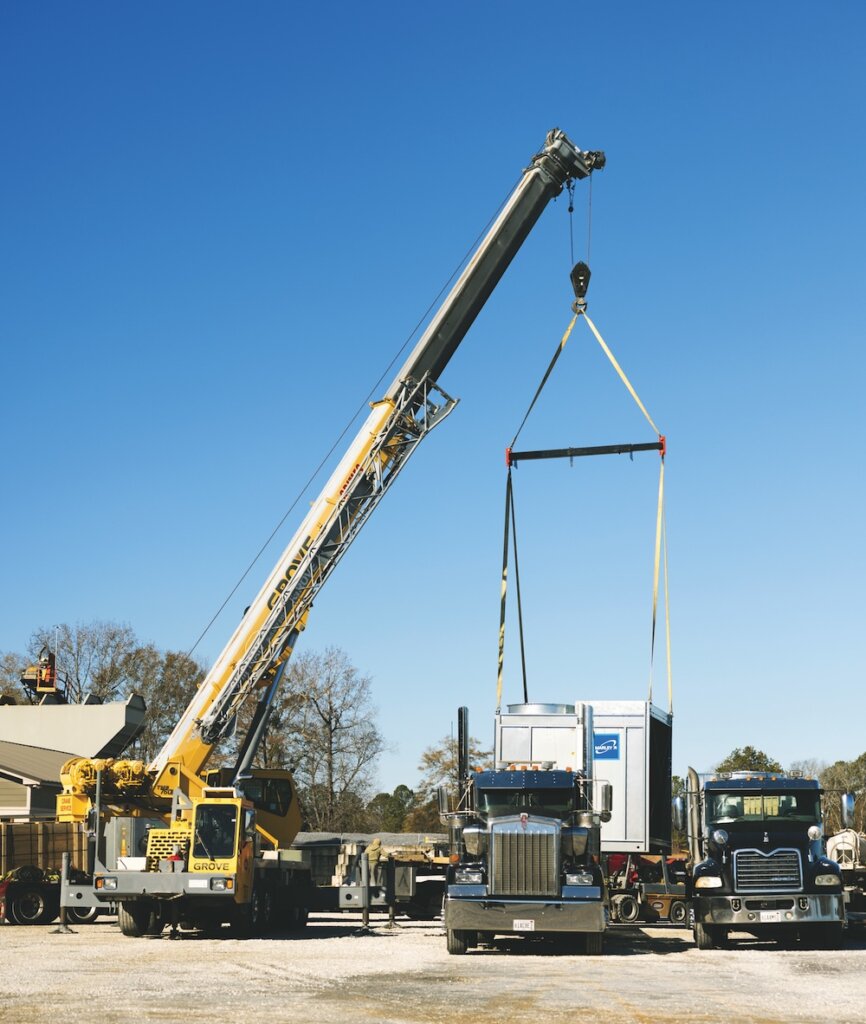
As a crane rental company, Conn Equipment can be hired to “lift and move almost anything imaginable,” according to company President Richard Conn, one of the three sons of founder Fred Conn (along with Frank and Alan) who currently run the business. This includes telephone towers, concrete walls, industrial heating and AC units, modular homes, fiberglass swimming pools, train cars, marble statues and a variety of items found at rock quarries and paper mills.
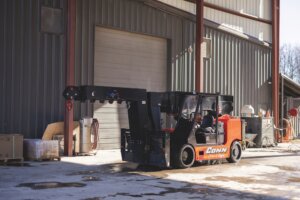
“It’s nothing for me to sit in a forklift and pick up half of an 80,000-pound press and move it out of the way,” says Richard Conn’s son, Jackson, who is part of the third generation of Conns working at the company. “That’s just a normal day here.”
Still, there are dozens of crane companies throughout Alabama that offer this type of service, so it must take something more than the basic equipment and knowledge to remain in business for eight decades. That, Richard Conn says, is where the true heavy lifting comes in.
“We’re hands-on. We’re right in the middle of everything we do,” Richard Conn says. “We’re the people who have to answer to our customers and make them happy. We listen to them and do our best to give them exactly what they want. That’s how you’re in business for 80 years.”
Company founder Fred Conn was a young pipe welder in the late 1930s who expanded his skills during World War II by working at the Alabama Army Ammunition Plant in Childersburg. After the war was over, he opened his own welding and machine shop in the area.
At first, Fred Conn simply fabricated structural steel, but then he began receiving job opportunities to erect the steel as well. This created the need for the company to have a crane. Rather than trying to buy one, Fred Conn simply built his own.
Conn described the process in a 1996 article in Dixie Contractor magazine. He stated that he took a Dodge Power Wagon (a civilian version of the four-wheel drive military trucks from World War II), put an A-frame on the back and a winch on the front dumpster, then fabricated a truck crane from the upper arm of a crawler crane.
And just like that, a new business was born.
Most of Conn Equipment’s initial crane work took place at the various marble quarries located in the Sylacauga area. Then in the early 1960s, Conn began working with Birmingham-based Rust Engineering Co. on paper mill projects throughout southern Alabama and Georgia, which enabled Fred Conn to expand the business.
In 1971, the company added a seven-truck, ready-mix concrete plant at Conn Equipment’s current location just off U.S. Highway 280 approximately 10 miles north of downtown Sylacauga. That aspect of the business remains in operation and is promoted as “Conn-Crete.”
“It was an idea that the community had,” says company Vice President Frank Conn, who manages the concrete division. “Some of the locals around here told our father that if he would go into the concrete business, they’d support it. He didn’t really have a dream to do it. They just hit him up, and he said sure, he’d do it.”
Another key moment of growth for the company occurred in 1986, when Conn Equipment purchased its first hydraulic crane from Japanese manufacturer Tadano, which had just expanded into North America after nearly 70 years of operation. Tadano cranes were considered to be among the best in the world due to their reliability and innovative technology.
“A friend of my dad’s who was an equipment dealer showed one to our dad, and he recognized a good machine when he saw it,” Richard Conn says. “That was a big turning point for us. It got us into some more markets.”
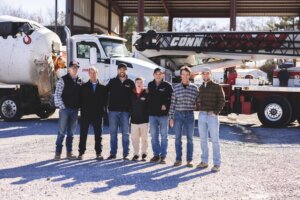
In 1991, the company added a second crane-rental location in Montgomery. But other than replacing its original cement operation with a new plant about five years ago, Conn Equipment has not undertaken many major changes in recent decades. The company currently has approximately 65 employees, including part-time drivers.
The one thing that has changed in recent years is the arrival of the family’s third generation into the business. Jackson Conn is one of three cousins now involved in the business, along with Jackson’s younger brother, Charlie, who has Down Syndrome but is often at the company’s offices. “He’s our morale booster,” Jackson says.
Having grown up around the business, Jackson Conn says he and his cousins are determined to keep Conn Equipment going for decades to come.
“There is a stigma of third generations (in family businesses) not making it,” Jackson Conn says, referring to an old adage that the third generation often lacks the motivation and determination of the first two. “That’s a challenge for me and my cousins.
“Knowing that our fathers have been holding the business together for this long and have gotten it to 80 years, that’s not possible without a lot of blood, sweat and tears. It’s a good feeling going home from work every day knowing we’ve been doing something most people wouldn’t have even attempted to do. They’ve given us a great start to life. Now we plan on keeping it going.”
Of course, it won’t be easy in this era of large corporations and conglomerates. Long-time family-run businesses are becoming increasingly rare throughout most industries. But Frank Conn says the key to the company’s longevity has been its willingness to put in the hard work needed to overcome any obstacles.
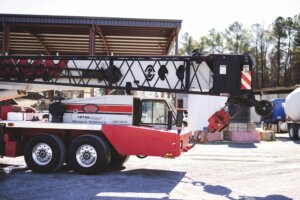
“It’s all about doing the things you don’t want to do. The things that are difficult but necessary,” Frank Conn says. “No matter what comes our direction – good, bad or ugly – we don’t run from our problems. We address everything that pops up on a daily basis.”
Richard Conn agrees. “We’ve probably all at one time or another wondered why we keep doing this,” he says with a smile. “Not all days are good. But we just keep going with it. Our motto is, ‘We at Conn Equipment have done so much for so long with so little, we are now qualified to do nearly everything with absolutely nothing.’
“The people here are what makes it work. That’s what a lot of the bigger companies don’t have. Others have cranes and trucks and forklifts and concrete plants. But they don’t have our people.”
Cary Estes and Cary Norton are Birmingham-based freelance contributors to Business Alabama.
This article appears in the February 2026 issue of Business Alabama.